
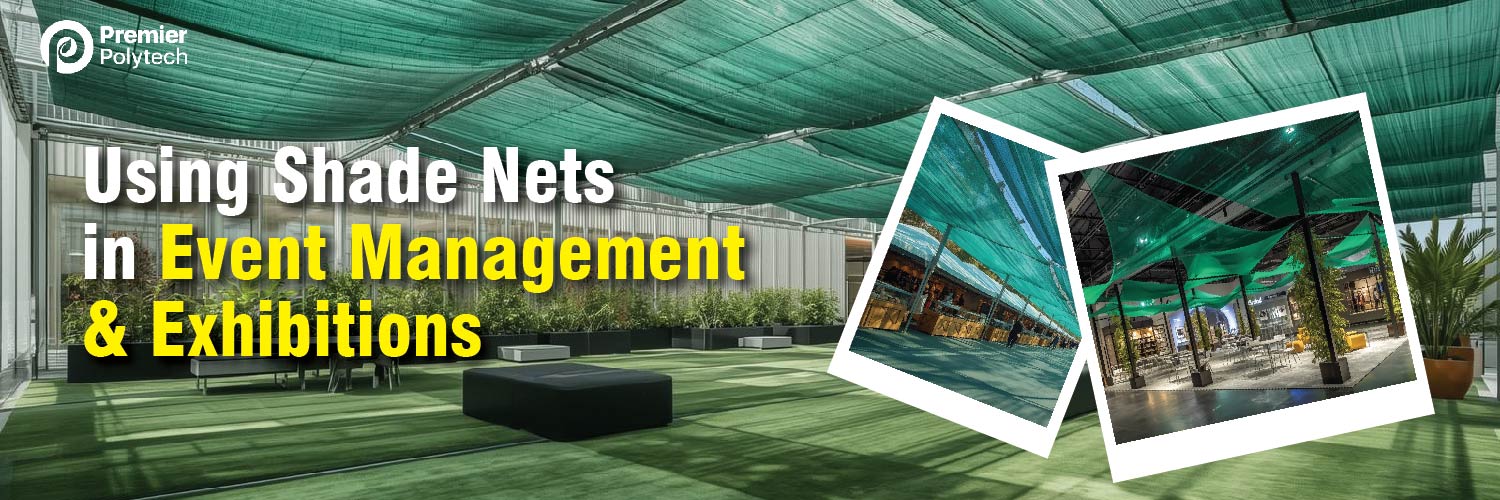
Successful outdoor events—be they large corporate exhibitions, local festivals, trade shows, or temporary outdoor weddings—hinge on one critical factor: attendee comfort. Unpredictable weather, especially intense sun and sudden drizzles, can quickly derail an event and negatively impact the attendee experience.
While traditional tents and marquees are costly and cumbersome, High-Density Polyethylene (HDPE) Shade Nets offer a flexible, cost-effective, and highly aesthetic solution for event management. Known for their durability and UV protection in agriculture, these nets translate perfectly into temporary outdoor shelters and branding backdrops.
This guide explores the diverse and practical applications of HDPE shade nets in the dynamic world of event management and exhibitions, enhancing both comfort and aesthetics.
The primary function of a shade net in event management is to mitigate environmental discomfort, ensuring a positive experience for all participants.
Heat Reduction: During long summer events, standing in direct sun is unbearable. Shade nets (typically $50\%$ to $75\%$ density) block a significant amount of solar radiation, reducing the ambient temperature underneath by several degrees. This makes waiting lines, seating areas, and vendor booths significantly cooler.
Preventing Heat-Related Issues: The reduced heat load lowers the risk of heat exhaustion and sunstroke among guests and staff, making the event safer and more responsible.
Health Barrier: Event attendees often spend hours outdoors. HDPE nets are UV stabilized and block up to $90\%$ of harmful UV rays. This provides crucial protection against sunburn and long-term skin damage, a silent assurance that enhances the perceived value of the event.
Impact Reduction: While not waterproof, the net breaks the velocity of raindrops, transforming a heavy downpour into a lighter spray, giving attendees time to seek solid shelter. It also shields food stalls and display areas from airborne dust, leaves, and small debris.
HDPE nets offer versatility that traditional structures cannot match, making event setup simpler and more dynamic.
Crowd Flow: Used to cover long queuing areas, entry points, or walkways between exhibition halls, shade nets keep guests comfortable while managing crowd flow.
Quick Setup: They are significantly lighter and easier to install than pop-up canopies, allowing quick deployment over large, unconventional spaces.
Uniform Shelter: Nets can be stretched over a series of vendor booths, providing a continuous, aesthetically pleasing roofline that looks uniform and professional, regardless of the individual stall construction.
Food Safety: Shading food and beverage areas keeps items cooler, reducing spoilage risks and maintaining the quality of perishable goods.
Equipment Longevity: Expensive sound systems, video screens, and lighting equipment are protected from direct sun exposure, which can cause overheating and damage.
Performer Comfort: Performers on outdoor stages benefit immensely from a shaded environment, reducing glare and heat stress.
Beyond function, the aesthetic versatility of HDPE nets allows them to integrate seamlessly into an event’s theme and branding.
Wide Range of Colors: HDPE nets are available in various colors (Black, Green, Blue, Beige, etc.). Event organizers can select colors that match the event’s corporate theme, sponsor branding, or aesthetic vision.
Visual Appeal: When properly tensioned, a high-quality shade net provides a clean, modern, and high-tech look that surpasses the cluttered appearance of multiple mismatched umbrellas or tents.
Backdrops: Denser nets ($80\%$ to $90\%$) can be hung vertically to act as temporary walls, concealing unsightly backstage areas, providing privacy for VIP lounges, or serving as a neutral backdrop for photo booths.
Wind Control: In breezy locations, vertical nets can reduce the wind speed, stabilizing lightweight displays and preventing decorations from blowing away.
For event planners working under tight budgets and timelines, HDPE nets provide significant operational benefits.
Lower Procurement Cost: The initial purchase price of HDPE nets is often a fraction of the cost of renting or purchasing heavy metal-framed tents.
Reusable and Durable: High-quality nets are incredibly durable and can be cleaned, folded, and stored for repeated use across multiple events and seasons, dramatically improving the return on investment (ROI).
Lightweight Logistics: Their low weight reduces transportation costs and logistical complexity compared to hauling heavy, rigid structures.
HDPE shade nets offer a powerful combination of functionality, aesthetics, and cost-effectiveness that is transforming outdoor event management. From protecting high-value equipment and minimizing heat stress for attendees to providing customizable, brand-friendly shelter, these nets are an indispensable tool.
By utilizing the durability and UV-blocking power of HDPE, event managers can guarantee comfort, ensure safety, and elevate the overall professionalism and success of their outdoor gatherings.
A: For general event shading and comfort, a 50% to 75% shade net is usually recommended. This range blocks enough sun to provide significant cooling while keeping the area bright and inviting.
A: Standard HDPE nets are not inherently fire retardant and will melt when exposed to high heat or flame. For indoor exhibitions or areas near open flames, event organizers must check local fire codes and source specially treated fire-retardant (FR) certified nets or fabrics.
A: Clean the net by hosing it down with water to remove dust and debris. Ensure it is completely dry before folding. Store the net in a dark, dry place away from direct sunlight when not in use to maximize its lifespan for future events.
A: Yes, but with limitations. While direct projection onto a lighter-colored net can work at night, for daytime events, it is better to attach lightweight, custom-printed banners or flags directly to the structure adjacent to or below the net for maximum visibility and branding impact.
For more than 5+ years we have been delivering world-class construction and we’ve built many lasting relationships along the way.
© 2025 Premier Polytech All Rights Reserved.