
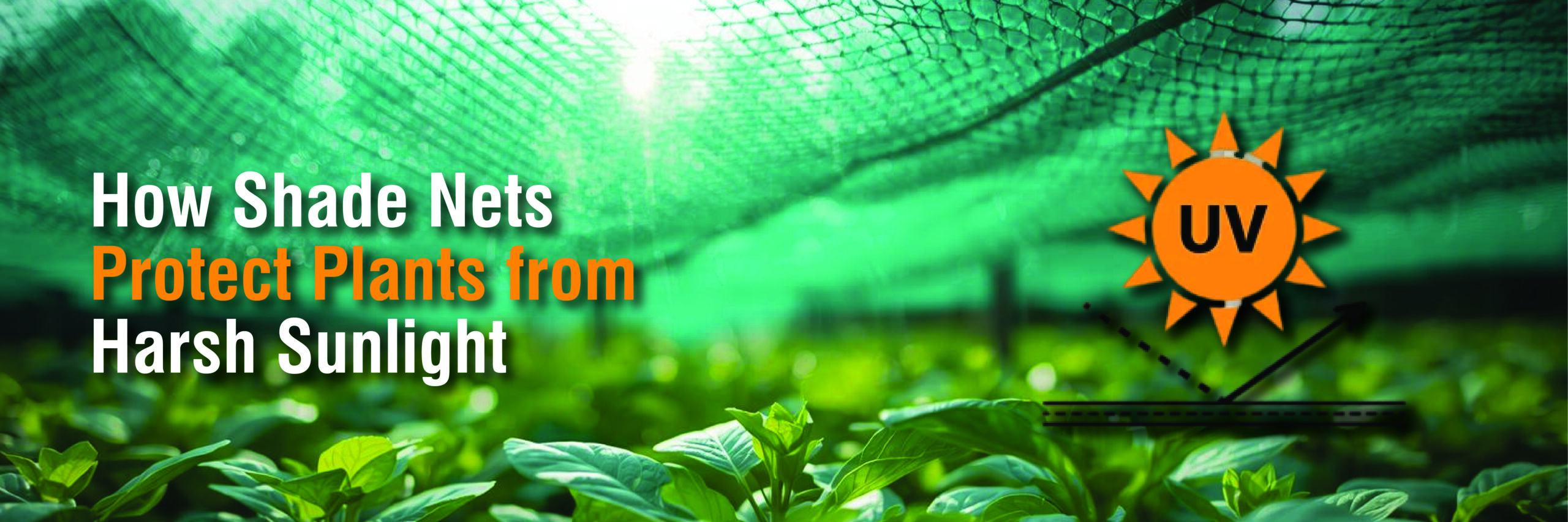
Sunlight is the lifeblood of every plant, providing the energy for photosynthesis. However, too much of a good thing can be catastrophic. In today’s climate, intense, unfiltered sunlight and accompanying heat waves pose a severe threat, leading to stress, dehydration, and reduced yields.
HDPE (High-Density Polyethylene) Shade Nets are the most effective and affordable solution farmers use to manage this risk. They don’t just block light; they scientifically modify the environment to create an optimal, stress-free microclimate where plants can dedicate maximum energy to growth and fruit production, rather than survival.
This guide delves into the precise mechanisms by which shade nets protect your valuable crops from the harsh realities of excessive solar radiation.
Shade nets protect plants by tackling the two main components of solar energy: intensity (quantity of light) and radiation (heat).
The most obvious function of a shade net is to reduce the amount of light reaching the plant. This is determined by the Shade Percentage (e.g., $35\%$ or $50\%$).
Preventing Photo-Oxidation (Sunscald): Intense solar energy can overwhelm a plant’s photosynthetic machinery. When light is too intense, the plant cannot process the energy fast enough, leading to the formation of damaging free radicals. This process, known as photo-oxidation, causes white or brown scorch marks on leaves and fruit. The shade net filters this intensity, keeping the light level within the plant’s safe metabolic range.
This is perhaps the most beneficial aspect. The knitted or woven structure of the HDPE net does not just create a simple shadow; it scatters the light.
Uniform Penetration: Direct sunlight creates harsh shadows, leaving lower leaves unexposed and inefficient. Diffused light is scattered in multiple directions, allowing it to penetrate deeper into the plant canopy. This ensures that lower leaves contribute to photosynthesis, leading to more uniform growth, bushier plants, and higher overall yield.
Reduced Self-Shading: Better light distribution minimizes the problem of upper leaves shading the lower ones, maximizing the plant’s total energy production surface.
High temperatures are often more damaging than the light itself, and shade nets directly address this thermal stress.
Radiation Blockage: By blocking a significant percentage of solar radiation, the net reduces the amount of energy absorbed by the air and ground underneath. This can lower the temperature in the shade house by $5^\circ C$ to $10^\circ C$ during peak heat hours.
Reduced Transpiration: The cooling effect and wind reduction dramatically decrease the rate of transpiration (water loss through leaves). This allows the plant to conserve water and prevent wilting and dehydration, ensuring energy is spent on growth, not survival.
Flower Drop Prevention: Many crops, particularly fruiting vegetables like tomatoes and capsicum, will abort (drop) their flowers when temperatures exceed a certain threshold (often $35^\circ C$). The shade net maintains the temperature below this critical point, ensuring successful flower retention and fruit setting, which is vital for high yields.
Beyond light and heat, shade nets provide robust physical protection necessary for delicate plant structures.
Windbreak Effect: The mesh structure acts as a windbreak, reducing the air speed over the plants. High wind increases transpiration and can cause physical damage (scuffing, broken stems).
Water Conservation: By reducing both wind and heat, the net significantly lowers the rate of evaporation from the soil, leading to major water savings and stable soil moisture—a key factor in preventing stress-related diseases.
Impact Buffering: Shade nets buffer the force of heavy raindrops, preventing soil splash (which spreads disease) and physical damage to leaves. Denser nets also offer a degree of protection against small hailstones.
For more than 5+ years we have been delivering world-class construction and we’ve built many lasting relationships along the way.
© 2025 Premier Polytech All Rights Reserved.