
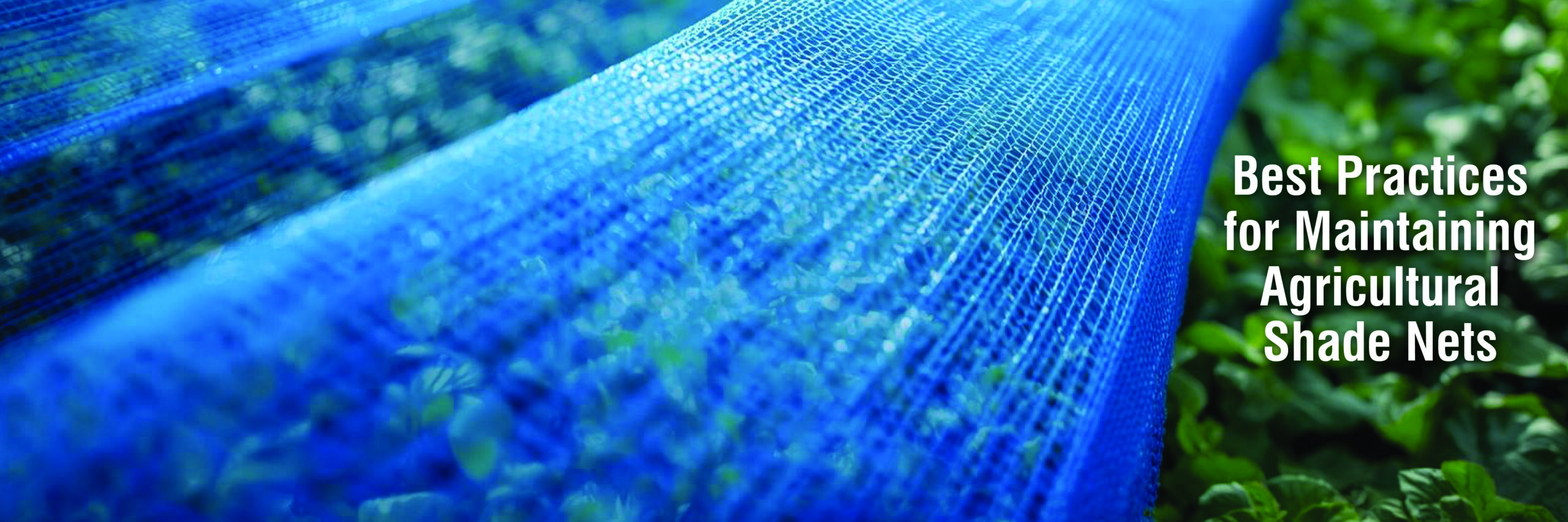
A high-quality HDPE shade net is built to last 5 to 8 years, but its actual lifespan depends heavily on one crucial factor: maintenance. While these nets are inherently durable and UV-stabilized, continuous exposure to harsh weather, wind stress, and accumulation of debris can drastically shorten their life and compromise their protective function.
Effective maintenance is not just about fixing damage; it is about taking proactive steps to ensure the net remains taut, clean, and structurally sound throughout the seasons. This translates directly into consistent crop protection, lower long-term costs, and maximum return on investment (ROI).
This guide provides a step-by-step checklist of best practices for maintaining your agricultural shade net and its support structure.
Regular checks are the first line of defense against costly failures.
After Every Major Storm: Immediately after high winds, heavy rain, or hail, inspect the entire structure. Focus on corner posts, perimeter wires, and tension points.
Check for Sagging: Look for areas where the net has stretched or sagged, especially in the center. Sagging collects water, which can collapse the entire structure.
Inspect Anchors: Verify that ground anchors, guy wires, and turnbuckles are still firmly secured and have not pulled out of the ground or foundation.
Tautness is Key: The net must remain drum-tight. A loose net flaps, leading to rapid wear and tear along the edges and attachment points.
Use Tensioners: Regularly tighten turnbuckles and tensioning hardware on the support wires to remove any slack caused by material stretching or settling of the structure.
Net-to-Wire Integrity: Ensure that all clips, grommets, and lacing ropes securing the net to the frame wires are intact and holding firmly. Replace any broken or brittle clips immediately.
Prevent Abrasion: Verify that the net is not directly rubbing against sharp edges of metal poles, wire ends, or screws. Use protective padding or tape on all potential abrasion points.
Keeping the net clean and repairing minor damage promptly prevents long-term deterioration.
Remove Debris: Use a long, soft brush or a low-pressure hose to gently remove accumulated dust, leaves, bird droppings, and debris. Dirt reduces the shade net’s effectiveness by blocking light and adding unnecessary weight.
Avoid Harsh Chemicals: Never use abrasive cleaners or harsh chemicals, which can strip the net of its vital UV stabilizers. Use only water or mild, pH-neutral soap.
Patch Small Holes: Do not ignore small tears. They can expand rapidly due to wind stress.
Repair Method: Use UV-stabilized, heavy-duty repair tape specifically designed for shade nets, or stitch the tear using a strong, UV-resistant thread in a lock-stitch pattern to prevent further unraveling.
Prevent Running: If the net is caught on something, quickly secure the tear edges with tape or thread to stop the damage from “running” across the net.
Maintenance extends to the entire support system and the net’s off-season storage.
Rust and Corrosion: If using GI (Galvanized Iron) or steel posts, regularly inspect them for rust, particularly at ground level and where the net hardware attaches. Apply rust-proofing paint as needed.
Wooden Posts: If using wooden posts, check for termite damage or rot, and reinforce or replace compromised supports before the next growing season.
If Netting is Seasonal: If your structure is temporary or the net is only needed during summer, carefully remove the net before winter.
Clean and Dry: Ensure the net is completely clean and dry before folding. Storing a damp net encourages mold and mildew.
Store Safely: Fold the net neatly and store it in a dark, dry, pest-free area, away from direct sunlight, which can cause premature degradation even when the net is folded.
Maintenance of agricultural shade nets is not a chore; it is a critical part of maximizing your farm’s efficiency. By implementing a proactive, consistent maintenance schedule—focusing on tension, cleanliness, and immediate repair—you will ensure your shade nets deliver their promised lifespan of high performance, year after year, securing your crops and your profitability.
A: You should perform a quick visual tension check weekly during the growing season. A comprehensive re-tensioning and hardware check should be done quarterly or immediately after any major weather event.
A: Yes, absolutely. If you live in an area prone to heavy snowfall, the net must be removed before winter. The weight of snow can easily exceed the load capacity of the shade structure and cause catastrophic collapse.
A: No. Standard duct tape is not UV stable and will degrade and fall off rapidly in the sun, leaving a sticky residue. Always use specialized, UV-stabilized shade net repair tape or a UV-resistant thread for durable, lasting repairs.
A: The most effective method is to ensure the bottom edge of the net is securely anchored, either by burying it in a shallow trench or fastening it tightly to a rigid baseboard, eliminating easy entry points for ground-dwelling pests.
For more than 5+ years we have been delivering world-class construction and we’ve built many lasting relationships along the way.
© 2025 Premier Polytech All Rights Reserved.