
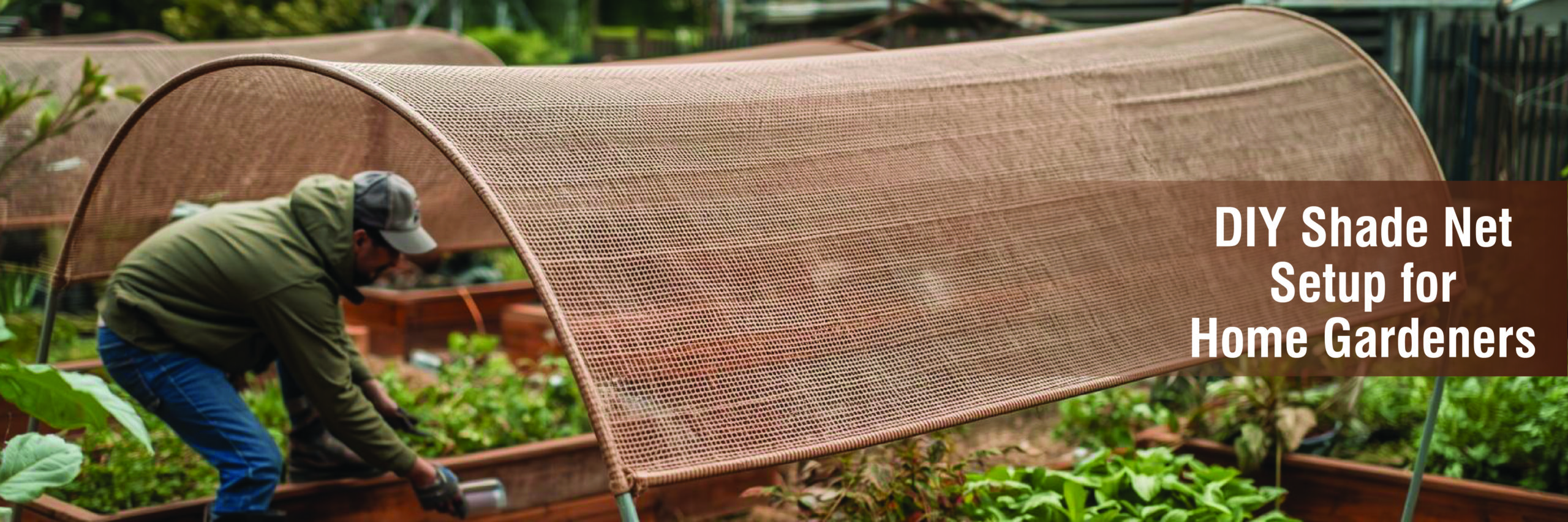
A shade net is the ultimate tool for managing intense summer heat and maximizing the health of your home garden, raised beds, or patio containers. You don’t need expensive pre-built structures; a simple, effective DIY shade net setup can be constructed quickly and affordably using common household or hardware store materials.
This guide provides a step-by-step plan for building a versatile, well-ventilated shade structure that protects your plants from harsh sunlight while ensuring they get the light they need to thrive.
Before you start building, decide on your structure and gather your materials.
Hoop House (Best for Raised Beds/Rows): Uses flexible materials (like PVC pipe) bent into arcs. Offers good height and excellent wind resistance due to the curved shape.
Four-Post Frame (Best for Patios/Pots): Uses four vertical posts connected by a horizontal frame. Simple to build and offers clear overhead space.
| Component | Material | Notes |
| Shade Net | HDPE Shade Net | 35% to 50% density is ideal for most home vegetables and ornamentals. |
| Vertical Posts (4) | PVC pipe (1-inch diameter) or Treated Wood (2×2 inch) | PVC is cheaper and lighter; wood is more durable. |
| Horizontal Frame | Connectors/Corner Pieces for PVC, or wood screws/metal brackets for wood | Used to create the top perimeter frame. |
| Anchoring | Rebar/Stakes (for PVC posts) or Post Anchors (for wood) | To secure the posts into the ground or containers. |
| Securing Net | UV-stabilized clips, plastic zip ties, or bungees | Essential for attaching the net to the frame securely. |
Measure the length (L), width (W), and desired height (H) of the area you want to cover. Remember to cut the net material with an extra 1-2 feet of allowance on all sides to allow for wrapping and tensioning.
A strong frame is essential to keep the net taut and prevent wind damage.
For Wood/Permanent Frame: Dig holes about 1 foot deep at each of the four corners. Place the posts and use gravel or concrete to secure them firmly, ensuring they are vertical using a level.
For PVC/Temporary Frame: Hammer metal stakes (rebar sections) 6 inches into the ground at each corner. Slide the PVC posts over the stakes for easy, sturdy removal.
Wood Frame: Secure the horizontal wooden pieces to the top of the posts using screws and metal brackets. Ensure the frame is level and square.
PVC Frame: Use 90-degree elbow connectors and T-connectors to join the top pieces of PVC pipe, creating a rectangular frame. PVC cement can be used for a permanent bond.
For spans longer than 6 feet, run strong wire or rope across the center of the frame (parallel to the long sides) to prevent the net from sagging under weight (like heavy rain).
Proper tensioning is the key to longevity and effectiveness.
Drape Carefully: Gently lift the shade net and place it over the finished frame. Ensure the net is centered with the excess material hanging evenly on all sides.
Anchor One Side: Choose one long side of the frame as your anchor. Fold the excess net material over the top rail and secure it tightly using zip ties or clips every 1 foot.
Pull Taut: Move to the opposite long side. This requires effort! Pull the net firmly across the frame to remove all wrinkles and slack. The net should be pulled taut like a drum skin.
Secure Under Tension: While maintaining tension, secure the net to the opposite rail using more zip ties, clips, or bungees.
Tidy the Ends: Pull the net taut on the short ends of the frame and secure them. Any excess material can be rolled up and secured with ties to prevent wind flapping.
Ground Anchor: Secure the bottom edge of the net to the ground or the base of your raised bed using heavy staples, bricks, or by attaching it to a base cable. This prevents wind from lifting the net and stops pests from crawling underneath.
Keep Sides Open: Do not seal the sides of your shade structure unless absolutely necessary for pest control. Keeping the sides open allows for cross-breeze, which prevents heat buildup and reduces the risk of fungal disease.
Ensure Sufficient Height: The 6 to 8-foot height is crucial, as it allows hot air that rises from the plants to escape and provides a cool air buffer.
Monitoring Light: If the weather turns cloudy and your plants start to look pale or “stretched,” temporarily remove or roll up one side of the net during the cooler parts of the day.
Winter Storage: Before the frost arrives, remove the net, clean it, let it dry completely, and store it in a clean, dark area to maximize its lifespan for the next growing season.
For more than 5+ years we have been delivering world-class construction and we’ve built many lasting relationships along the way.
© 2025 Premier Polytech All Rights Reserved.