
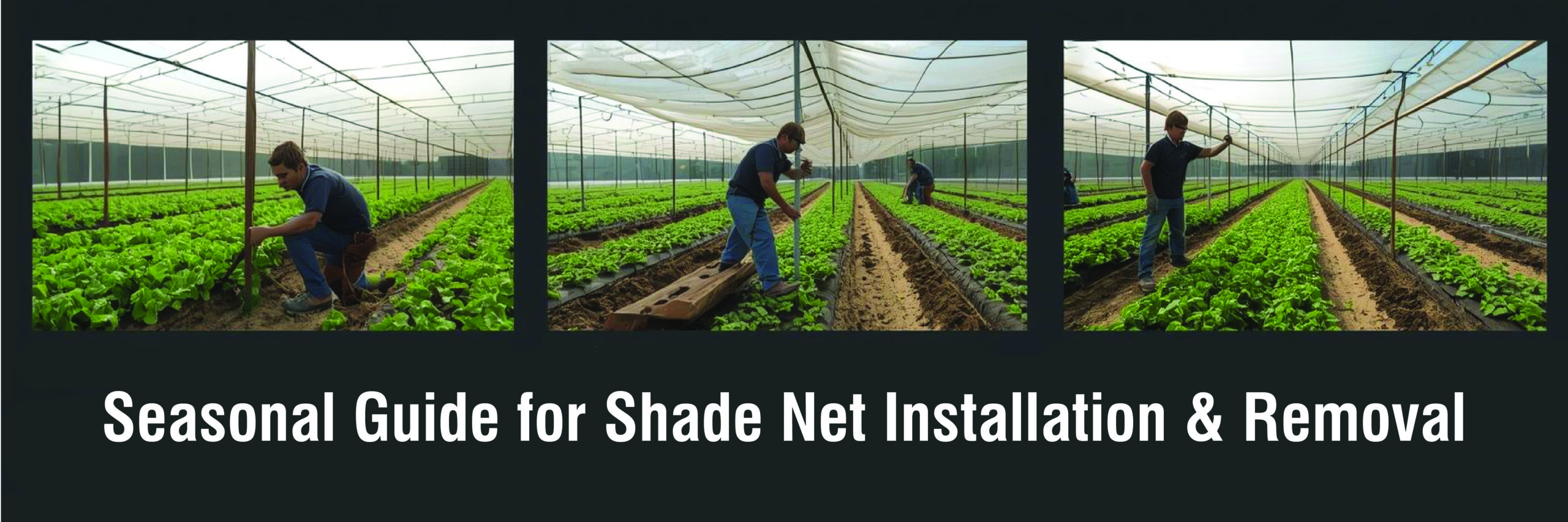
The decision of when to install and when to remove a shade net is as critical as choosing the net itself. A shade net provides immense benefits, but deploying it too early can limit necessary light, and removing it too late can expose valuable crops to harsh conditions.
Effective, seasonal management of your shade net structure is the key to maximizing light efficiency during growth phases and ensuring robust protection during peak stress periods. This systematic approach saves labor, extends the net’s lifespan, and guarantees your crops receive the optimal amount of light and protection year-round.
This guide provides a seasonal framework for the installation and removal of agricultural shade nets, tailored to typical climatic transitions.
Goal: Provide protection as the sun intensifies and temperatures begin to rise.
| Timeframe | Action | Rationale |
| Late Winter / Early Spring (Feb-March) | Structure Inspection & Repair: Inspect all posts, cables, and tensioning hardware. Repair or replace any damaged components. | Ensures the entire structure is sound and ready for high tension and wind loads. |
| Mid-Spring (March-April) | Installation: Deploy the shade net when daytime temperatures consistently exceed the crop’s optimal growth range or when sun intensity becomes noticeably harsh. | Prevents early-season heat stress and sunscald during critical flowering/setting stages. |
| Post-Installation | Tension Check: Re-check and tighten all tensioning hardware (turnbuckles) 3–5 days after the initial installation. | The net material may stretch slightly after the initial deployment; re-tensioning prevents damaging slack. |
Goal: Continuous protection against peak heat, UV, and monsoon rains.
| Timeframe | Action | Rationale |
| Peak Summer (May-June) | Daily Monitoring: Check the internal temperature and humidity daily. Ensure side ventilation flaps are open, and cooling systems (if any) are functioning. | Ensures the net is performing its core cooling function and preventing humidity buildup. |
| Pre-Monsoon | Check Drainage: Ensure the net remains taut, with no potential low spots for water collection. Clear ground drainage channels beneath the structure. | A tight net sheds water efficiently, preventing the excessive weight accumulation that causes collapse during heavy rains. |
| Post-Monsoon (Aug-Sept) | Damage Inspection: Check all attachment points and the net surface for any tears or abrasion caused by high winds and heavy rainfall. | Immediate repair prevents small tears from expanding into large, costly failures. |
Goal: Maximize light penetration for crops that finish ripening and prepare the net for storage.
| Timeframe | Action | Rationale |
| Early Autumn (Sept-Oct) | Evaluate Crop Needs: Assess if the net is still needed. For late-fruiting or maturing crops, the net may still be necessary to prevent late-season sunscald. | Maximize light exposure as temperatures moderate to finish ripening, but protect from the last intense days of sun. |
| Late Autumn (Oct-Nov) | Cleaning: If removal is scheduled, hose down the net while it is still installed to remove accumulated dust, leaves, and debris. | Cleaning the net on the frame is easier; removing debris is crucial for effective off-season storage. |
Goal: Protect the net from damaging snow and frost, and maximize low-angle winter sunlight.
| Timeframe | Action | Rationale |
| Early Winter (Nov-Dec) | Removal: Carefully remove the net (best done on a calm, sunny day). Avoid dragging the net across the ground to prevent snags. | Maximizes low-angle winter sunlight for cold-weather crops and removes the structure before frost/snow damage. |
| Post-Removal | Dry and Fold: Ensure the net is completely dry. Fold the net neatly and roll it up. | Storing a damp net causes mold and mildew. Proper folding prevents creases that weaken the material. |
| Storage: | Store the net in a cool, dark, pest-free area (e.g., a closed shed). | Protects the net from moisture, rodents, and further UV exposure during its resting period, greatly extending its service life. |
| Structure Storage: | Disassemble temporary PVC/bamboo frames, or inspect permanent steel/wood structures and apply rust/rot protection as needed. | Prevents deterioration of the support infrastructure over the winter months. |
Managing your shade net according to the seasons is a professional farming practice that pays dividends. By rigorously adhering to this installation, maintenance, and removal schedule, you not only protect your net investment, but you also ensure that every crop receives optimal light and temperature control necessary for peak production and profitability throughout the year.
For more than 5+ years we have been delivering world-class construction and we’ve built many lasting relationships along the way.
© 2025 Premier Polytech All Rights Reserved.