
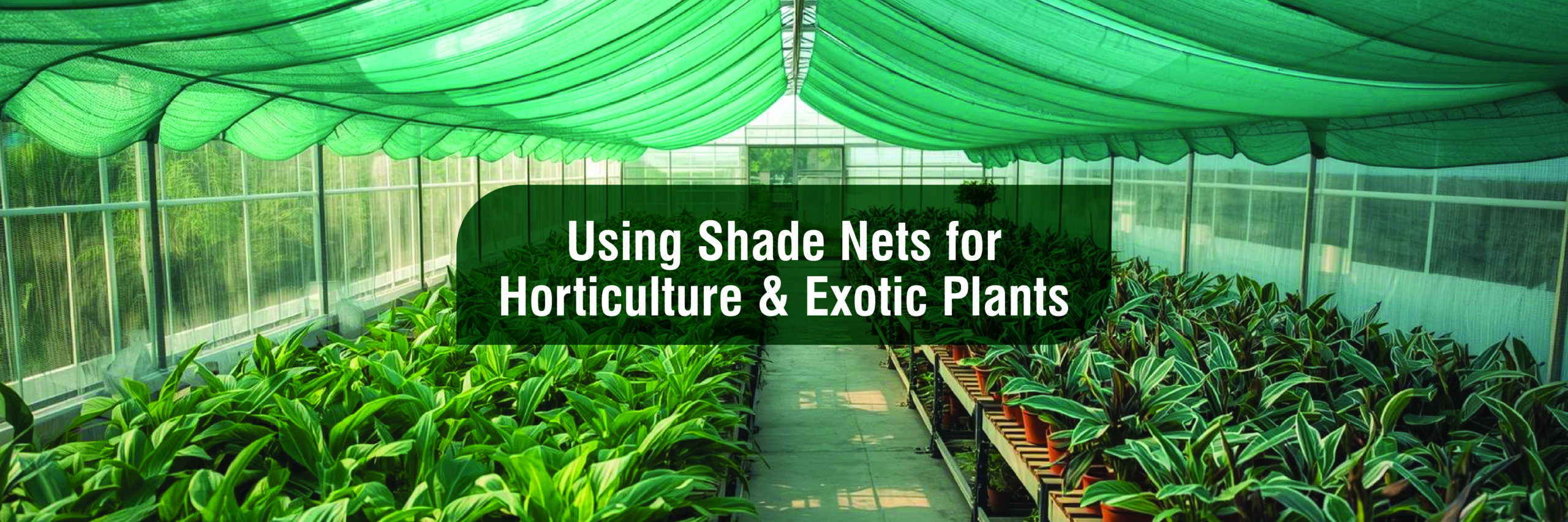
Horticulture, which encompasses the cultivation of high-value ornamental plants, flowers, and specialized herbs, often deals with exotic species that thrive only under precise environmental controls. Unlike common field crops, these plants cannot tolerate direct, intense sunlight, extreme temperatures, or rapid climate fluctuations.
HDPE (High-Density Polyethylene) Shade Nets are indispensable tools in this sector, providing a precise, customized microclimate that mimics the plant’s natural habitat—be it a rainforest floor or a humid, coastal understory. Shade nets allow horticulturists to grow delicate, premium-grade crops successfully and sustainably.
This guide details the strategic use of shade nets to meet the demanding requirements of high-value horticultural and exotic plants.
Exotic plants require light control that moves beyond simple protection and into the realm of biological stimulation.
Understory Plants: Many valuable exotic plants, such as orchids, ferns, bromeliads, and certain flowering shrubs, are native to the forest floor where light is naturally filtered by a dense canopy.
Targeted Density: For these species, shade nets are typically used at $50\%$ to $75\%$ density (or even higher) to recreate the specific low-light conditions they need for optimal growth, preventing the leaf scorch and heat stress that kill them in full sun.
Color Enhancement: Direct, harsh sunlight can fade the vibrant colors of ornamental foliage and flowers. Shade nets, especially those in White or Pearl, scatter or diffuse the light.
Market Value: This diffused light ensures uniform light penetration, promoting better pigment development and resulting in deeper, richer, and more consistent leaf and flower coloration—a key factor in the high market value of horticultural products.
Flowering Control: For certain flowering plants, the light intensity and duration are crucial. Shade nets can be part of a photoperiod control system. Denser, light-blocking fabrics can be pulled over the plants at specific times to regulate light exposure, ensuring the flowers bloom precisely when required by the market (e.g., for holiday seasons).
Temperature and humidity stability are paramount for the survival of non-native species.
Preventing Thermal Shock: Many exotic plants are highly sensitive to sudden temperature shifts. Shade nets dampen these daily extremes by lowering the daytime peak temperature by $5^\circ C$ to $10^\circ C$.
Mitigating Heat Stress: This continuous moderation keeps the environment stable, preventing the plant stress that leads to stunted growth and poor flower quality.
Reduced Transpiration: The cooling effect of the net significantly lowers the rate of evaporation from both the soil and the plant leaves (transpiration).
Humid Environment: For tropical or high-humidity species, this passive management helps maintain higher relative humidity levels beneath the net structure, reducing the need for expensive and energy-intensive misting or fogging systems.
Horticultural products represent a high investment per unit, making physical protection essential.
Rain and Wind Buffering: The nets soften the impact of heavy rain and reduce wind speed. This is crucial for plants with delicate foliage, large flower heads, or brittle stems, preventing physical damage and scuffing that would reduce their market grade.
Seedling Success: Shade nets are essential for propagation stages (cuttings, grafting, seed starting). They provide the gentle, controlled environment necessary for delicate root development and the successful transition of young plants from lab culture to the soil. Nursery yield maximization relies entirely on this controlled shading.
For the horticulture sector, shade nets are not a luxury but a fundamental necessity. They allow growers to precisely customize the environment—managing light intensity, diffusion, temperature, and humidity—to suit the exacting demands of high-value and exotic plants. By utilizing the correct shade net, horticulturists secure the health, aesthetic quality, and consistent production of their delicate crops, driving profitability and advancing specialized cultivation techniques.
For more than 5+ years we have been delivering world-class construction and we’ve built many lasting relationships along the way.
© 2025 Premier Polytech All Rights Reserved.