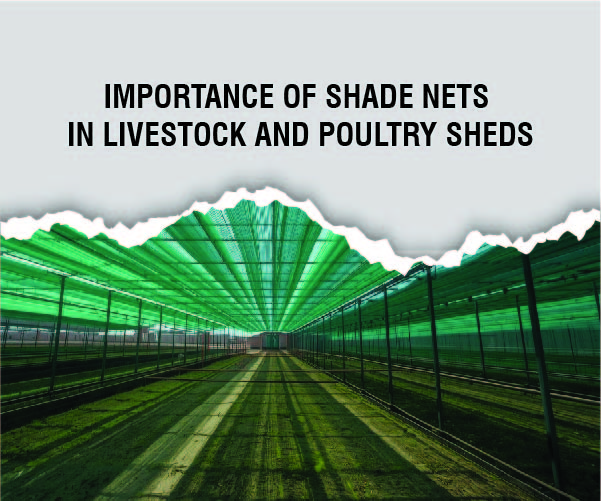
Shade Nets for Livestock & Poultry: Critical Role in Cooling, Welfare, & Production

Keeping Them Cool and Productive: The Critical Role of Shade Nets in Livestock and Poultry Welfare
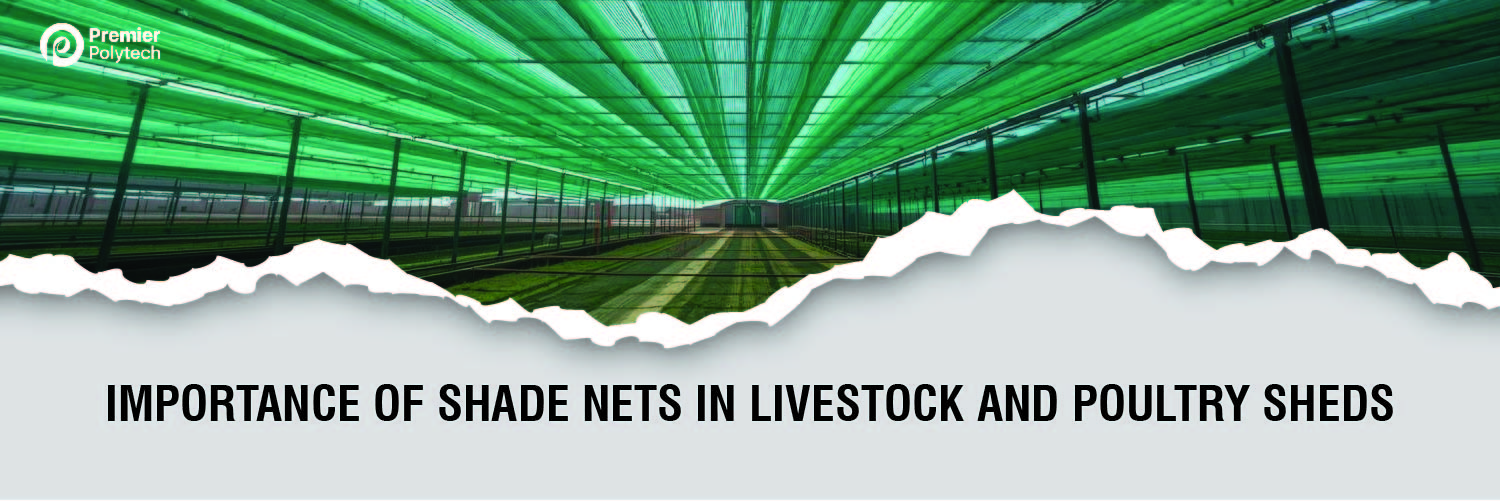

Introduction: The Invisible Threat to Farm Productivity

In agricultural economics, the greatest unseen threat is often the weather. While we typically focus on feed costs and disease, the impact of heat stress on livestock and poultry can be devastating, leading to massive financial losses due to reduced feed intake, lower production, and increased mortality.

Heat stress occurs when an animal’s body temperature rises above its thermal comfort zone, forcing it to expend significant energy just to cool down. In extreme cases, this can be fatal.

The solution doesn’t always require expensive, high-tech climate control systems. For the modern farmer, the most effective and affordable defense against intense solar radiation is the strategic installation of Shade Nets.

More than just a cover, a well-chosen shade net acts as a crucial thermal shield, creating a stable, cooler microclimate indispensable for maintaining animal health, maximizing production, and ensuring compliance with modern animal welfare standards. This detailed guide explores how these essential tools are transforming the profitability and sustainability of livestock and poultry operations.

Part 1: Combatting Heat Stress in Dairy and Beef Cattle

Dairy cows and beef cattle are particularly susceptible to heat stress, especially high-yielding dairy breeds like Holstein-Friesians. Above a certain temperature-humidity index (THI), their production plummets.

1. Direct Temperature Reduction and Solar Shielding

The core function of the shade net is to block the direct thermal radiation from the sun.

  • The Problem: Direct sunlight can increase the effective temperature on the animal’s hide by several degrees, forcing the animal to pant heavily and shift blood flow away from vital organs (like the udder) to the skin for cooling.
  • The Shade Net Solution: Installing a 50% to 70% Shade Factor Net over feedlots, milking queues, and resting areas drastically cuts the solar heat load. Studies show that shade structures can reduce the radiant heat exposure by up to 50%, resulting in a measurable drop in the animals’ core body temperature and respiration rates. This immediate relief is crucial during peak summer hours.

2. Maintaining Feed Intake and Body Weight

The first sign of heat stress in cattle is a reduced appetite. Cows eat less to reduce the metabolic heat generated by digestion.

  • The Productivity Impact: For dairy cows, this translates to lower milk yield (which can drop by 10% to 30%). For beef cattle, it results in reduced daily weight gain (Average Daily Gain or ADG).
  • The Economic Benefit: By keeping the surrounding environment cooler, the shade net encourages cattle to maintain their normal feeding behavior. Shaded cattle consume more feed, leading to higher milk production (butterfat and protein content also improve) and better feed conversion efficiency in beef operations, directly boosting the farm’s profitability.

3. Enhancing Reproductive Performance

Heat stress has a profoundly negative effect on cattle fertility, leading to reduced conception rates and early embryonic death.

  • The Biological Link: Elevated body temperatures stress the reproductive system. Bulls suffer from reduced sperm quality, and cows struggle to conceive during and after a heat wave.
  • The Shade Net Advantage: Providing shade throughout the summer months is a key management strategy to maintain the cow’s internal homeostasis. By protecting them from hyperthermia, farmers can significantly improve breeding success rates and ensure a more predictable calving cycle.

Part 2: Optimizing the Environment in Poultry Sheds

Broilers (meat chickens) and layers (egg-laying hens) have an even narrower thermal comfort zone than cattle. Due to their feather insulation and lack of sweat glands, they rely heavily on panting, making them highly susceptible to fatal heatstroke.

1. Mortality Reduction and Health

Heat stress is a leading cause of mass mortality in poultry, particularly in open-sided or naturally ventilated sheds.

  • The Danger: Sheds without proper shading can experience a “greenhouse effect,” trapping heat and quickly raising the internal temperature above the critical $35^{circ}text{C}$ ($95^{circ}text{F}$) threshold.
  • The Shade Net Solution: Installing 50% to 60% Shade Nets on the roof and on the side walls (as curtains) blocks the sun’s direct rays while allowing sufficient airflow. This lowers the shed’s peak internal temperature, preventing widespread heatstroke and reducing overall mortality, which is a key metric for a poultry farm’s success.

2. Protecting Layer Production

For laying hens, heat stress directly impacts the quantity and quality of egg production.

  • The Quality Impact: High temperatures can cause hens to lay smaller eggs and, critically, eggs with thin or soft shells due to altered calcium metabolism. This severely reduces the market value of the batch.
  • The Productivity Impact: By stabilizing the shed temperature, shade nets ensure that the layers remain comfortable. Comfortable hens eat properly, maintaining calcium balance and resulting in a higher number of standard-sized eggs with robust shells, maximizing the number of Grade A products.

3. Improved Ventilation and Air Quality

The shade net structure helps in air movement, which is essential for removing heat and ammonia build-up.

  • Combined Strategy: When used as side curtains, the nets can be partially lifted to allow a controlled cross-breeze, facilitating air exchange. The shade itself keeps the air flowing into the shed cooler, enhancing the efficiency of natural ventilation and creating a healthier atmosphere that minimizes respiratory stress.

Part 3: Selecting the Right Shade Net and Installation

Choosing and installing the correct shade net is critical to realizing its full benefits.

Factor Cattle & Dairy Poultry & Broilers Rationale
Shade Factor 50% to 70% 50% to 60% Balances heat reduction with essential airflow and necessary light.
Color Black or Green Black or White White/Aluminet reflects more heat, offering superior cooling for highly insulated poultry.
Material UV-Stabilized HDPE (High-Density Polyethylene) UV-Stabilized HDPE (High-Density Polyethylene) Ensures durability against weather and animal contact.
Structure Height High enough (8-15 feet) to allow for air movement and prevent bunching. Installed directly on the roof and sides of the shed structure. Good height prevents heat from radiating immediately back onto the animals.
Orientation Ideally, placed to shade the area during the hottest part of the day (South and West sides). Full coverage over the roof and side-wall curtain systems. Maximizes protection against afternoon sun.

Conclusion: A Foundation for Modern, Profitable Farming

The use of high-quality shade nets in livestock and poultry farming is no longer an optional upgrade; it is a foundational climate management practice.

By shielding animals from the destructive force of solar radiation, shade nets directly address the physiological and economic consequences of heat stress. They are a cost-effective, durable, and highly impactful investment that translates into:

Higher Feed Intake = Increased Milk / Meat / Egg Yield = Greater Profitability

For any farmer aiming for sustained production efficiency, improved animal welfare, and superior product quality, incorporating a robust shade net system is the smartest decision one can make in preparation for the inevitable summer heat.

Frequently Asked Questions (FAQ)

Q1. What is the ideal shade percentage for a dairy cattle shed?

The ideal shade percentage for dairy cattle typically ranges from 50% to 70%. This range provides a substantial reduction in radiant heat without creating excessive darkness. In very extreme climates, a heavier net (up to 75%) may be considered, but 50-60% is often the sweet spot, allowing good airflow while maintaining a cool environment.

Q2. How does heat stress affect milk production in cows?

Heat stress dramatically reduces milk production in three key ways:

  1. Reduced Feed Intake: The cow eats less to decrease metabolic heat. Less feed means less energy for milk production.
  2. Redirected Energy: Energy that would normally go toward milk production is instead used for cooling mechanisms (like panting).
  3. Hormonal Changes: Heat stress triggers hormonal changes that directly interfere with milk synthesis in the udder.

Q3. Should I use a black, green, or white shade net for my poultry farm?

While black and green nets are common, white (or Aluminet/reflective) shade nets are often superior for poultry sheds. White and reflective nets block the sun’s rays primarily by reflection, preventing heat from building up on the net’s surface. This results in a cooler air temperature immediately beneath the net compared to black nets, which block light by absorption, retaining some heat.

Q4. Does the shade net help protect animals in cold weather too?

Yes, indirectly. While their primary function is cooling, the dense netting acts as an effective windbreak. By reducing the wind chill factor during cold months, the nets help the animals conserve body heat, reducing the energy they need to spend to stay warm and further contributing to overall welfare.

Q5. Besides shade nets, what other simple measure should I take to prevent heat stress on my farm?

The most critical and non-negotiable step is ensuring unlimited access to fresh, cool water. In hot weather, water consumption increases exponentially. Ensure water trough capacity is sufficient for peak demand, and that the troughs are clean and easily accessible, especially in shaded areas.
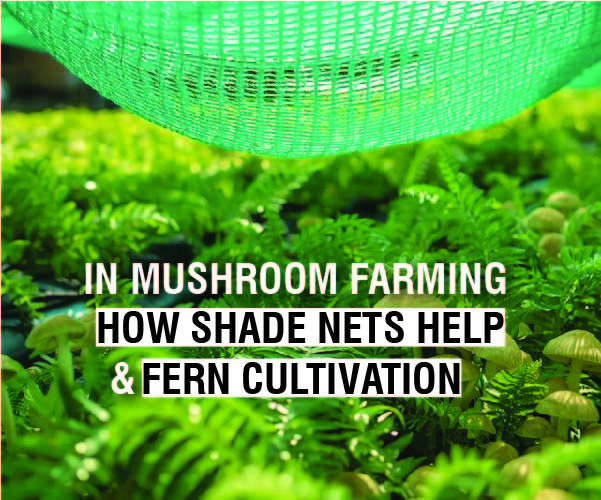
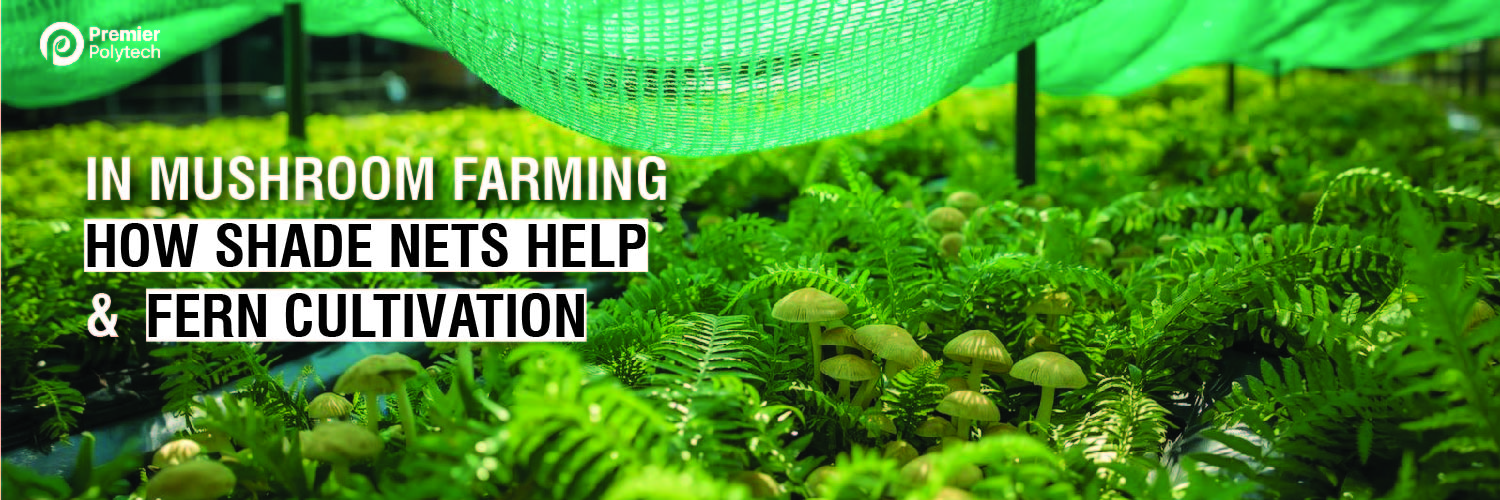
Shade Nets for Mushrooms & Ferns: Mastering the Microclimate

The Dark Art of Growing: How Shade Nets Master the Microclimate for Mushrooms and Ferns


Introduction: The World of Low Light, High Reward

When we think of farming, we typically imagine fields bathed in bright sunlight. However, two of the most popular and commercially lucrative crops—mushrooms and ferns—thrive in the exact opposite environment: a cool, damp, and dimly lit world that mimics the forest floor.

Achieving this delicate, specific microclimate is the single greatest challenge in their cultivation. For modern commercial growers, the simple yet powerful solution lies in the strategic use of Shade Nets.

These high-density polyethylene (HDPE) knitted nets are not just about blocking light; they are sophisticated tools for environmental engineering. This guide will deep-dive into the critical functions of shade nets, explaining precisely how they enable the successful, large-scale production of both humidity-loving mushrooms and light-sensitive ferns.

Part 1: Mushroom Cultivation – The Perfect Fungi Fruiting Environment

Mushrooms, being fungi, do not perform photosynthesis and do not need direct sunlight to grow. In fact, most gourmet and medicinal varieties like Oyster, Shiitake, and Button mushrooms require a dark environment for the vegetative growth phase (mycelium run) and a highly controlled environment during the fruiting phase (mushroom formation).

The shade net addresses three non-negotiable requirements for successful mushroom production:

1. Controlling Light for Pinning and Quality

While mycelium growth occurs best in the dark, most mushrooms require a small “kick” of light (known as the pinning trigger) to initiate the formation of the actual fruit body.

  • The Problem: Direct, intense light generates heat and can desiccate (dry out) the vulnerable mushroom pins, leading to low yield and poor quality.
  • The Shade Net Solution: Installing a High-Density Shade Net (80% to 90% shade factor) outside the mushroom shed or low tunnel provides just the right level of ambient light. This diffused, low-intensity light encourages uniform pinning and helps in maintaining the correct cap and stem morphology, which is crucial for market-grade mushrooms.

2. Mastering the Critical Humidity Factor

Mushrooms are composed of up to 90% water. Their growth rate and size are directly linked to the relative humidity (RH) of the surrounding air. They thrive in environments of 85% to 95% RH.

  • The Problem: In outdoor or semi-outdoor setups, high temperatures cause rapid evaporation, drying out the substrate blocks and preventing the formation of large, healthy mushrooms.
  • The Shade Net Solution: The netting acts as a vapor barrier and heat shield. By blocking solar radiation, it significantly lowers the ambient temperature (often by $5^{circ}text{C}$ to $10^{circ}text{C}$). This temperature reduction drastically reduces the rate of evaporation, allowing the moisture from watering or humidifiers to remain in the air, stabilizing the high RH required for a successful harvest.

3. Temperature Regulation (Cooling Effect)

Unwanted heat is the primary enemy of mushroom growers, as high temperatures can kill the sensitive mycelium or trigger the growth of competing molds and bacteria.

  • The Shade Net Solution: The dense shade net house (often a single or double-layered structure) creates a cool, damp microclimate. This natural cooling, combined with proper ventilation, helps keep the internal temperature within the optimal range of $15^{circ}text{C}$ to $25^{circ}text{C}$ (depending on the species), preventing heat stress and ensuring biological efficiency.

Part 2: Fern Cultivation – Replicating the Rainforest Canopy

Ferns—from the delicate Maidenhair to the robust Boston fern—are classic shade-loving plants. In nature, they grow beneath the dense canopy of trees, receiving filtered light, protection from wind, and continuous high humidity.

For commercial fern cultivation, the shade net serves as the artificial “tree canopy,” controlling the three key environmental stressors: light, heat, and moisture.

1. Preventing Sunburn and Frond Damage (Light Intensity)

Direct, unfiltered sunlight will quickly scorch and permanently damage the delicate fronds of most fern varieties, turning the vibrant green leaves brown and unmarketable.

  • The Problem: Exposing ferns to harsh mid-day sun results in irreparable tissue damage and plant stress.
  • The Shade Net Solution: Ferns require High Shade Factors (60% to 80% Black or Green Nets). This intense shading effectively filters out the harmful UV and high-intensity visible light, leaving only the soft, ambient light they need. The ideal light condition is Bright, Filtered Light, which a well-chosen net perfectly delivers.

2. Reducing Water Evaporation and Transpiration Stress

Ferns are susceptible to drying out because they lack the thick, waxy cuticle found on sun-loving plants. Maintaining soil and air moisture is paramount.

  • The Problem: High solar radiation drives up the rate of transpiration (water loss through leaves) and evaporates soil moisture rapidly, forcing growers to water constantly and inefficiently.
  • The Shade Net Solution: By cutting down light intensity and temperature, the shade net significantly reduces the evaporative demand on the plants. This allows the roots to absorb water at a steady, manageable pace, prevents the wilting of fronds, and lowers the overall water requirement, making cultivation more sustainable and less labor-intensive.

3. Creating Stable Temperature and Humidity

Like mushrooms, ferns require a stable, slightly cooler environment, often thriving in temperatures between 18’C and 26’C.

  • The Shade Net Solution: The net structure traps some of the moisture, elevating the relative humidity around the plant canopy (the microclimate), while also preventing sudden temperature spikes. This creates the humid, cool, and stable atmosphere of the deep forest, minimizing stress and maximizing the lush, vibrant growth that customers demand.
Factor Mushroom Cultivation (Fruiting Sheds) Fern Cultivation (Nursery/Greenhouse)
Shade Factor 80% – 90% (To create near-dark conditions with minimal light trigger) 60% – 80% (To replicate a dense, filtered tree canopy)
Color Preference Black (Maximum light and heat absorption/blockage) Green or Black (Green is often preferred for a natural aesthetic and subtle light spectrum shift)
Weave Type Mono-Mono or heavy Tape-Tape (Focus on high density) Mono-Mono (For long-term durability and superior light diffusion)
Primary Benefit Humidity Stabilization and Heat Exclusion Sunburn Prevention and Water Conservation

Conclusion: The Essential Environmental Regulator

In the specialized fields of mushroom and fern cultivation, the shade net transitions from a simple piece of cloth to an essential component of the business plan. Its ability to create and stabilize the non-negotiable cool, humid, and low-light microclimate directly translates into higher yields, better product quality, lower operating costs (less watering), and reduced crop loss from heat stress or sun damage.

For the modern cultivator seeking to master these lucrative but delicate crops, the strategic implementation of a high-quality, appropriately rated shade net is not just an expense—it is a mandatory and highly rewarding investment.

Frequently Asked Questions (FAQ)

Q1. Can I use the same shade net for both mushroom and fern cultivation?

While possible, it is not optimal. Mushroom fruiting sheds typically require higher shade (80%-90%) to achieve near-dark conditions. Ferns usually require 60%-80% shade. A net too dark for ferns will stunt their growth, and a net too light for mushrooms may cause them to dry out or fail to pin correctly. You should select the shade factor based on the specific crop’s needs.

Q2. Is a black or green shade net better for mycology (mushroom growing)?

Black shade nets are generally preferred for mushroom fruiting. Black nets absorb and block the maximum amount of solar radiation, resulting in the greatest reduction in heat and light intensity. Since mushrooms primarily need high humidity and darkness, the black net’s superior blocking ability is advantageous.

Q3. How does the shade net specifically help with humidity in a mushroom shed?

The shade net helps in two ways:

  1. Lowering Air Temperature: By blocking sunlight, the net keeps the air inside the shed significantly cooler. Cooler air can hold more moisture before it feels “saturated.”
  2. Reducing Evaporation: The lower temperature drastically reduces the rate at which water evaporates from the mushroom substrate (compost or blocks) and the surrounding air, effectively stabilizing the high relative humidity required for large, healthy mushroom formation.

Q4. What happens if ferns get too much light, even if it’s indirect?

If the light intensity is too high, the delicate fronds of the fern will suffer from sun scorch or burn. This appears as brown, crispy patches on the leaves. While the plant may survive, the damaged fronds are unmarketable, and the plant’s overall health and aesthetic value are severely diminished.

Q5. Do I need a full greenhouse structure to use a shade net for ferns or mushrooms?

No. While a polyhouse or greenhouse offers the most control, shade nets are highly effective when used on low tunnels, hoop houses, or simple wooden/bamboo frame structures over the crop area. For mushrooms, the net is often draped over a simple, ventilated shed structure to block light from the sides and top.

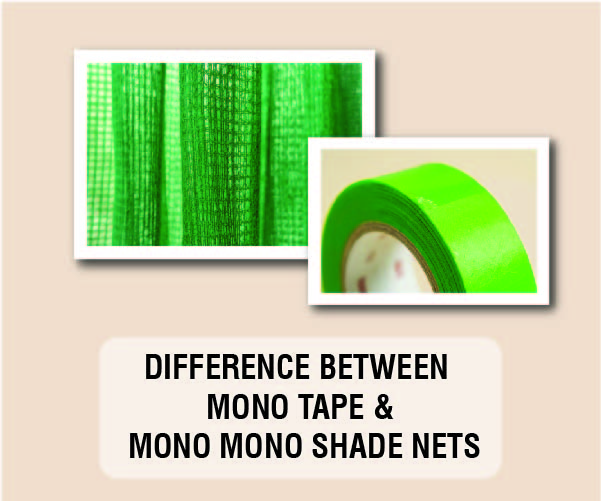
Mono-Tape vs. Mono-Mono Shade Nets: Critical Differences, Uses, & Durability

Mono-Tape vs. Mono-Mono Shade Nets: The Critical Difference in Nursery and Greenhouse Management


Introduction: The Hidden Science in Your Shade Cloth

In high-tech horticulture, even the smallest detail, such as the weave pattern of a shade net, can have a profound impact on crop health, longevity of the material, and your overall return on investment.

Many growers are familiar with the basic concepts of Shade Percentage and Color, but the true performance of a knitted HDPE shade net hinges on its fundamental structure: the yarn composition. When you shop for quality shade nets, you will frequently encounter two specific weaving structures: Mono-Tape (Monofilament-by-Tape) and Mono-Mono (Monofilament-by-Monofilament).

These seemingly technical terms represent two distinct philosophies of light diffusion, strength, and air permeability. Choosing the wrong type can compromise the microclimate of your greenhouse or nursery. This ultimate guide breaks down the critical differences between Mono-Tape and Mono-Mono shade nets to help you make an informed, data-driven decision for your valuable plant stock.

The Foundation: Understanding Shade Net Yarn

All premium agricultural shade nets are knitted from High-Density Polyethylene (HDPE), chosen for its UV resistance, chemical inertness, and strength. The “weave” is determined by the type of HDPE yarn used in the Warp (vertical strands) and Weft (horizontal strands).

1. Monofilament (Mono) Yarn

  • Structure: A single, strong, round or oval-shaped plastic thread, similar to a fishing line.
  • Properties: Extremely high tensile strength, minimal stretching, superior resistance to wind, hail, and friction (rubbing against the frame). Provides excellent structural integrity.
  • Function: Primarily used for strength and durability.

2. Tape (Flat) Yarn

  • Structure: A thin, flat plastic ribbon or tape, resembling a flattened piece of cellophane.
  • Properties: Excellent covering ability, lightweight, and economical. It blocks light very efficiently for its weight.
  • Function: Primarily used for efficient shading and cost-effectiveness.

Weave Comparison: Mono-Tape vs. Mono-Mono

The names of these nets tell the whole story of their construction. The first yarn type is typically the Warp (vertical/strength), and the second is the Weft (horizontal/shading).

FeatureMono-Mono Net CharacteristicsBest Suited For…ConstructionMonofilament yarn used in both Warp and Weft.Maximum Durability & Longevity.Strength & LongevityHighest tear strength and longest lifespan. Can last 7-10+ years. The robust structure withstands extreme weather (high wind, heavy hail).Permanent Structures: Commercial greenhouses, high-wind zones, valuable crops where replacement is costly (orchids, tissue culture).Light DiffusionSuperior Light Diffusion. The round threads scatter light more effectively, ensuring uniform light reaches the lower leaves.High-Value Nurseries: Propagation houses, seedlings, and crops requiring uniform light for high-quality production.Airflow & WeightExcellent airflow due to the less “dense” physical shape of the round yarn. Slightly heavier GSM.Hot, Humid Climates: Where maximum ventilation is needed to prevent fungal disease.CostHigher Initial Cost due to the specialized, higher-grade monofilament yarn.Growers prioritizing a long-term investment and minimal maintenance.

The Practical Implication: Choosing the Right Net for Your Purpose

The decision between Mono-Tape and Mono-Mono is not about which is “better,” but which is appropriate for your specific growing environment and budget.

1. For Durability and Extreme Weather (Choose Mono-Mono)

If your nursery or greenhouse is located in an area prone to high winds, hail, or heavy snow/ice loads, the superior tensile strength and non-stretch characteristics of a Mono-Mono net are essential. Its structural integrity minimizes the risk of catastrophic failure, protecting both the net and your entire crop. While the initial investment is higher, the extended lifespan (up to double that of Mono-Tape) results in a lower cost-per-year.

2. For Uniform Growth and Quality (Choose Mono-Mono)

High-value crops like tropical ornamentals, delicate flowers, and propagation seedlings benefit immensely from superior light diffusion. The Mono-Mono net’s round threads scatter light more evenly, reducing harsh shadows and hot spots. This ensures that every part of the plant receives consistent light, promoting uniform, non-stretching (non-etiolated) growth—a critical factor for market quality.

3. For Cost-Effective and Temporary Use (Choose Mono-Tape)

If you are setting up a seasonal shading area, a temporary structure, or are working with a tighter budget, the Mono-Tape net offers an excellent balance of shade effectiveness and cost. It’s perfect for temporary shading of leafy greens in the summer or as a second-layer inner shade screen. The monofilament warp yarn still provides sufficient basic strength for moderate conditions.

Final Verdict: The Smart Investment

For the commercial grower focused on longevity, minimal maintenance, and consistent high-quality crop production, the Mono-Mono Shade Net is the clear long-term winner. Its structural superiority and light-diffusion properties provide a more stable and higher-performing microclimate.

For the budget-conscious grower or those with temporary or seasonal needs, the Mono-Tape Shade Net is a highly effective, economical choice that offers excellent protection for its price point.

Ultimately, understanding the “Mono-Tape vs. Mono-Mono” difference empowers you to move beyond simple shading percentage and choose the precise engineering required to optimize the performance of your entire nursery or greenhouse system.

Frequently Asked Questions (FAQ)

Q1. What does ‘Mono-Tape‘ (Tape X Mono) specifically mean in a shade net?

It refers to the materials used in the knitting process: Monofilament (Mono) yarn is used in the warp (lengthwise/vertical) direction for strength, and Flat Tape yarn is used in the weft (widthwise/horizontal) direction for efficient shading. This combination creates a balance between durability and cost-effective light blocking.

Q2. Which type of net is better for windy areas, Mono-Tape or Mono-Mono?

Mono-Mono Shade Nets are significantly better for windy areas. The monofilament yarn in both the warp and weft directions gives the net superior tensile strength and tear resistance. This means it stretches less and is less likely to suffer structural damage from constant flapping and high-speed winds.

Q3. Does the weave type affect the shade percentage?

No. The weave type (Mono-Tape or Mono-Mono) does not determine the shade percentage. The shade percentage (e.g., 50% or 75%) is controlled by the density of the knitting (how tightly the threads are packed) and the thickness of the individual yarns, regardless of whether they are round (Mono) or flat (Tape).

Q4. Which net offers better light diffusion for plant growth?

Mono-Mono Shade Nets offer better light diffusion. The round monofilament threads act like tiny lenses, scattering the incoming light more uniformly across the canopy. This diffused light penetrates deeper, reaching lower leaves and reducing leaf burn, which promotes a more homogenous and healthier plant structure.

Q5. Are Tape-Tape nets still available, and how do they compare?

Yes, Tape-Tape nets (Tape yarn in both warp and weft) are still available but are considered the most basic and least durable option. They are highly economical but offer the lowest lifespan, poor resistance to wind/hail, and the least light diffusion. They are primarily used for very temporary or non-critical applications.

Shade Net Selection for Optimal Plant Growth

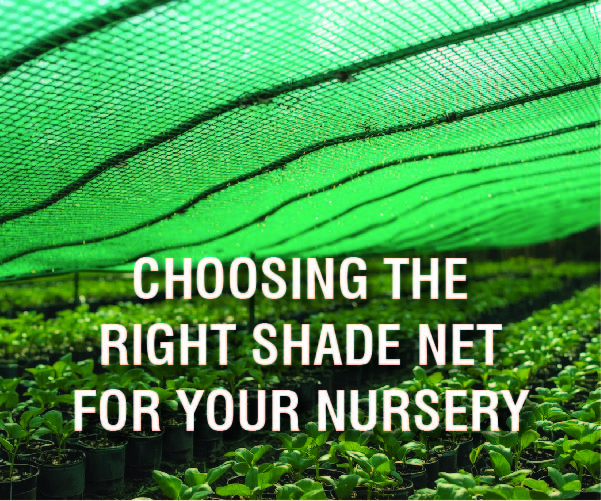
Choosing the Right Shade Net for Your Nursery: The Ultimate Guide to Plant Health


Introduction: Why Shade Nets are Essential for Your Nursery

A shade net, often referred to as a shade cloth, is much more than just a piece of fabric. In the world of horticulture and nursery management, it is a critical tool for creating an optimal microclimate, especially in regions with intense sunlight and high temperatures. For young, tender seedlings and sensitive ornamental plants, direct exposure to harsh sun and UV rays can be catastrophic, leading to sunburn, water stress, and ultimately, plant death.

The primary function of a shade net is to regulate light intensity, control temperature, and reduce water evaporation, thereby creating a protective, nurturing environment where delicate plants can thrive. However, a single “one-size-fits-all” shade net does not exist. The wrong net can be as detrimental as no net at all, hindering growth by blocking too much essential light. This guide provides a comprehensive breakdown to help you select the perfect shade net for your specific nursery needs.

The Foundation: Understanding Shade Net Percentage (Density)

The most crucial factor in selecting a shade net is its shade percentage or density. This number indicates the percentage of sunlight the net is designed to block. Consequently, a higher percentage means less light reaches your plants.

Shade PercentageLight PenetrationIdeal Application in Nursery 30% – 50% High (50% – 70% light)Sun-loving plants, hardy seedlings, some vegetables (e.g., tomatoes, peppers, early-stage flowering plants). Offers mild sun protection and windbreak.50% – 75%Medium (25% – 50% light)General nursery use, most ornamental plants, saplings, and established potted plants. Excellent for balancing protection and necessary light. This is the most common choice for versatile nurseries.75% – 90%Low (10% – 25% light)Shade-loving plants (e.g., ferns, orchids, Anthuriums), sensitive foliage, and during periods of extreme summer heat. Also used for screening in poultry farms or construction.

Key Takeaway: Always determine the light requirement of your most sensitive plants first. For a mixed nursery, a 50% or 75% shade net is often the practical and safe middle ground.

The Influence of Shade Net Color

While the percentage blocks the quantity of light, the color of the shade net affects the quality (spectrum) of light that reaches the plants, as well as heat management.

  • Green Shade Net: The most traditional and popular choice. It filters light naturally, blending well with the plant foliage. Green is often chosen for general-purpose nurseries and offers a balanced environment, promoting good growth for a wide variety of plants.
  • Black Shade Net: Offers the maximum shading and temperature reduction. It absorbs heat. Black nets are highly effective in very hot climates but can sometimes lead to excessive heat build-up underneath if ventilation is poor.
  • White/Pearl Shade Net: Highly reflective. It reflects excess sunlight and heat away, making the area beneath significantly cooler than with black or green nets. This is ideal for sensitive, heat-stressed plants and in extremely hot regions.
  • Red/Blue/Other Chromatic Nets: These are specialized nets used in advanced horticulture (photoselective netting). They manipulate the light spectrum to influence specific growth characteristics, such as accelerating flowering (Red) or promoting vegetative growth (Blue). They are typically used only for specific crop research or high-value cultivation.

Material and Weave: Durability and Functionality

The material and weave of the shade net dictate its lifespan, strength, and air permeability.

1. Material: HDPE is King

The industry standard for durable, long-lasting shade nets is High-Density Polyethylene (HDPE).

  • UV Stabilization: Ensure your chosen HDPE net is UV-stabilized. Sunlight breaks down regular plastic, causing it to become brittle and tear. A quality UV-stabilized net can last from 5 to 10 years, offering a better return on investment.
  • Water Permeability: HDPE shade nets are typically water-permeable, meaning rainwater and irrigation can pass through, preventing water pooling and potential structural damage.

2. Weave Type: Knitted vs. Woven

FeatureKnitted Shade Net (Raschel Weave)Woven Shade NetMaterialHDPE (Monofilament or Tape)Polypropylene or HDPE TapesDurabilityExcellent. Resists tearing and will not unravel if cut.Good, but can unravel if cut (requires edge taping).WeightLightweight and flexible.Heavier and stiffer.AirflowExcellent air circulation and heat dissipation.Lower airflow, can lead to slightly more heat build-up.Best ForGeneral nurseries, greenhouses, and areas with moderate to high wind. Highly recommended.Temporary covers, specific applications requiring a very flat profile.

For most nursery applications, the Knitted HDPE Shade Net is the superior choice due to its durability, resistance to fraying, and excellent air permeability.

Key Factors to Consider Before Purchase

Before finalizing your shade net order, assess these critical factors:

  1. Local Climate:
  2. Type of Plants (Crop Requirement):
  3. Structure and Installation:
    • Height: Install the net with sufficient height (at least 7-10 feet) to allow for good airflow underneath. Poor ventilation traps heat and humidity, encouraging fungal diseases.
    • Tension: The net must be stretched taut over a robust frame (metal, bamboo, or wood) to prevent flapping in the wind, which can damage the material and the underlying plants.
  4. UV Protection: A good shade net should offer protection not just from sun intensity, but also from harmful Ultraviolet (UV) radiation, which can scorch leaves and damage plant DNA. Always verify the UV stabilization of the product.

Conclusion: Nurturing Growth with the Right Choice

Choosing the right shade net for your nursery is a strategic investment in the health, quality, and profitability of your plant stock. It is a decision that requires balancing light requirements, local climate severity, and the practical needs of durability and installation. By understanding the core principles of shade percentage, color, and material (HDPE), you can create a perfectly calibrated environment – a “sweet spot” microclimate – that protects your delicate plants and ensures robust, healthy growth for years to come.

Frequently Asked Questions (FAQ)

Q1. What is the most common shade net percentage used in a general nursery?

The most common and versatile shade net percentage for a general nursery growing a mixed variety of ornamental plants, saplings, and potted stock is 50% to 75%. This range offers an excellent balance between necessary light for photosynthesis and protection from midday heat and UV rays.

Q2. Does the color of the shade net affect the temperature underneath?

Yes, significantly. Dark colors like Black or Green absorb more solar heat, which provides maximum shading but can lead to heat build-up underneath if airflow is poor. Light colors, particularly White or Pearl, reflect more light and heat, making the area beneath the net considerably cooler—an excellent choice for very hot, arid regions.

Q3. Is it better to choose a Knitted or a Woven shade net?

For long-term nursery use, Knitted HDPE Shade Nets are generally recommended. They are made from UV-stabilized HDPE, resist tears, do not unravel when cut, and allow for excellent air circulation, which is crucial for preventing heat stress and fungal diseases in plants.

Q4. Can I leave the shade net up all year round?

In most tropical or subtropical regions, shade nets are kept up year-round. However, if you live in a region with distinct seasons, it is often best to remove a high-density net (e.g., 75%) during winter or cloudy seasons to ensure plants receive maximum available sunlight, as insufficient light can lead to weak, ‘leggy’ growth.

Q5. How do I prevent heat from building up under the shade net?

Heat build-up is primarily prevented by ensuring proper ventilation.

  1. Install the net with sufficient height (7-10 feet) to allow air movement.
  2. Avoid draping the net directly onto the plants.
  3. Ensure open side walls or use roll-up side panels to allow hot air to escape and cool air to enter.