
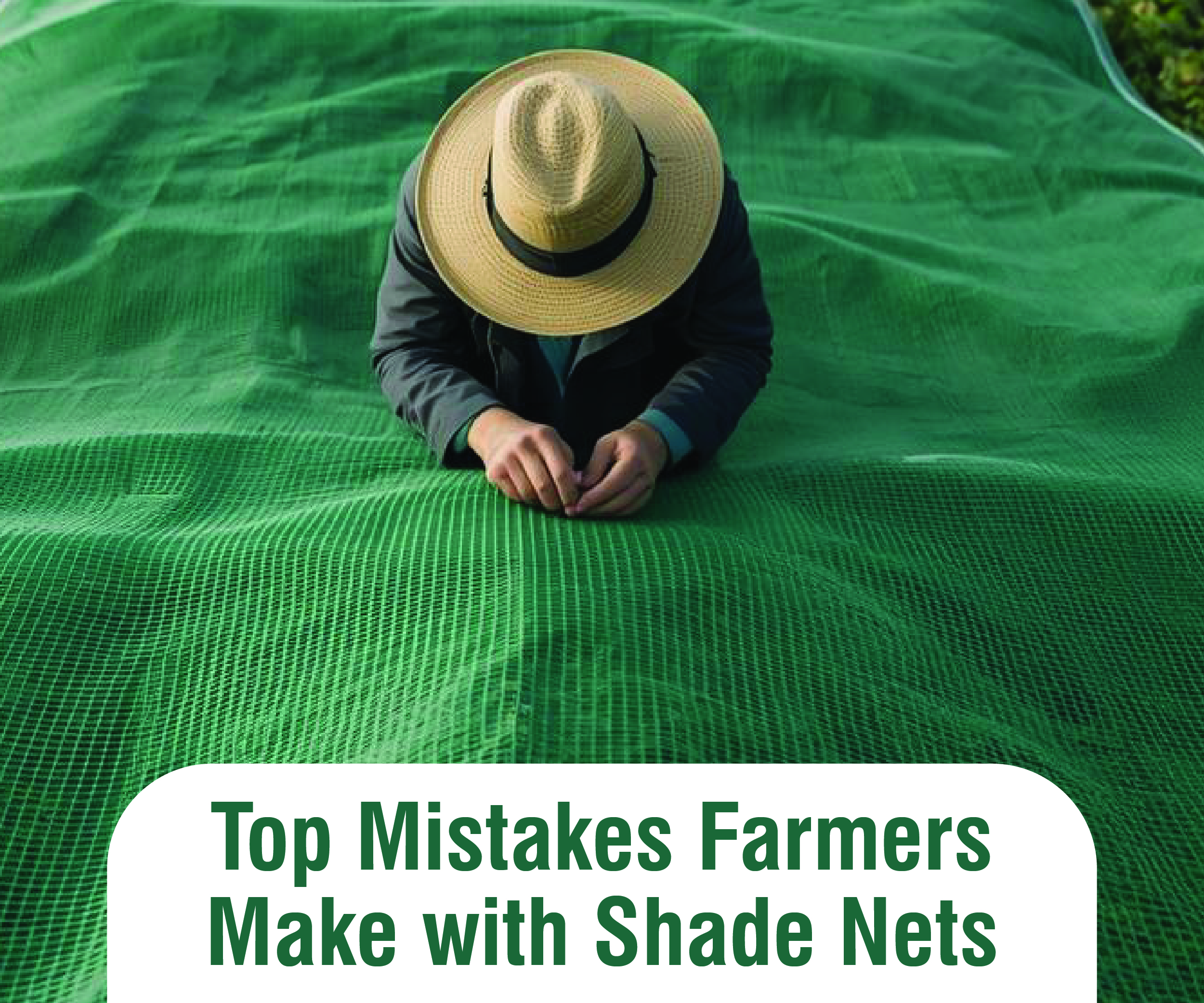
Top Mistakes Farmers Make with Shade Nets and How to Avoid Them
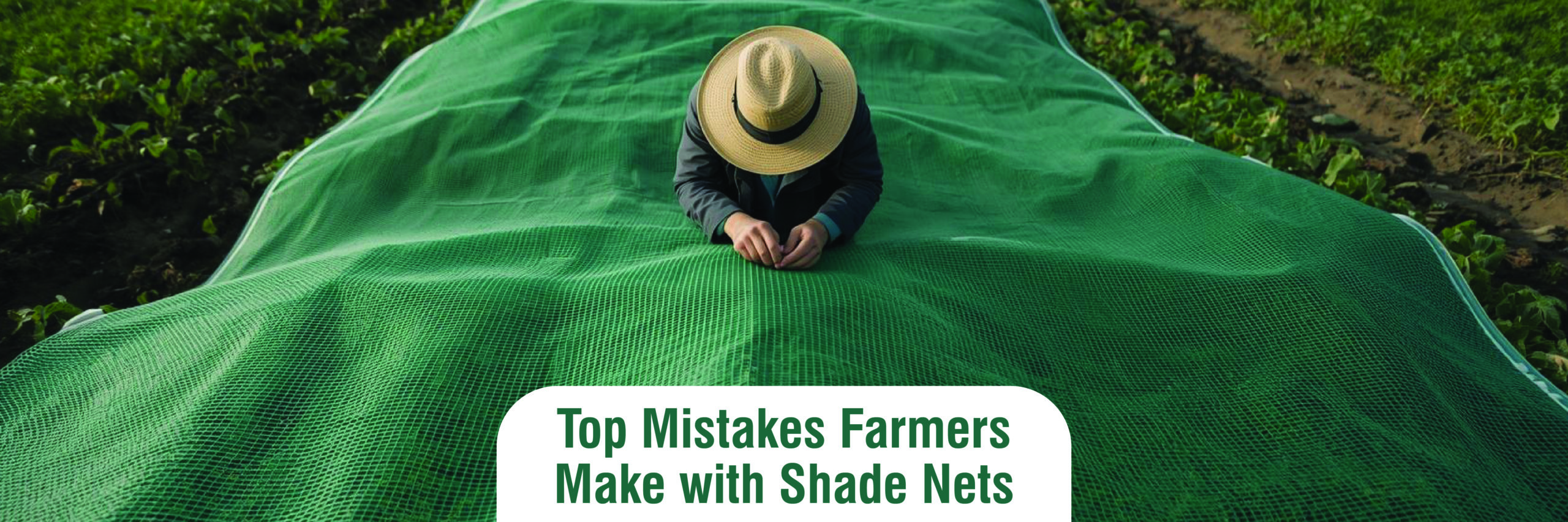
Introduction: The Fine Line Between Protection and Failure
Shade nets are one of the most powerful tools in modern agriculture, capable of boosting yields, conserving water, and extending the growing season. However, the benefits of a quality net can be instantly negated by common, easily avoidable mistakes during planning, selection, and installation.
These errors often lead to premature net failure, structural collapse, and, critically, crop damage from heat or insufficient light. Learning from these pitfalls is the fastest way to ensure your shade net investment provides maximum return and protection.
Here are the top mistakes farmers commonly make with shade nets and expert advice on how to prevent them.
I. Mistakes in Planning and Selection
The most costly errors are often made before the net is even installed.
1. Choosing the Wrong Density (Shade Percentage)
-
The Mistake: Using a net that is too dense (e.g., $75%$ or $90%$) for sun-loving crops like tomatoes or bell peppers, or, conversely, using too light a net in extremely hot climates.
-
The Result: Too much shade causes etiolation (long, weak, ‘leggy’ stems) and flower drop due to insufficient energy for reproduction. Too little shade leads to heat stress and sunscald.
-
The Fix: Research your crop’s physiological needs. For most fruiting vegetables, target a light-to-moderate shade net (typically $35%$ to $50%$). Use dense nets only for nurseries, orchids, or leafy greens.
2. Prioritizing Price Over Durability (Ignoring GSM and UV)
-
The Mistake: Purchasing the cheapest net available without checking the GSM (Grams per Square Meter) and the UV stabilization percentage.
-
The Result: Cheap nets, often lacking sufficient UV protection, become brittle and degrade rapidly, tearing after only one or two seasons. This forces frequent, expensive replacement and labor costs.
-
The Fix: Treat the net as a long-term asset. Invest in nets with a high GSM (over $110 text{ GSM}$) and a guaranteed UV stabilization of $3%$ to $5%$. This ensures a lifespan of 5+ years, making the net cheaper in the long run.
3. Incorrectly Assessing Dimensions
-
The Mistake: Cutting the shade net exactly to the size of the structure.
-
The Result: There is no material left for securing and tensioning, leading to weak attachment points that easily tear away in the wind.
-
The Fix: Always allow for a 1 to 2-foot overhang on all sides beyond the structure’s frame. This extra material is necessary for wrapping around support cables and achieving proper tension.
II. Mistakes in Installation and Structure
Improper installation drastically shortens the net’s lifespan and compromises its function.
4. Failing to Achieve Drum-Tight Tension
-
The Mistake (Most Common Failure): Installing the net loosely, leaving slack and wrinkles.
-
The Result: A loose net flaps violently in the wind, leading to abrasion and material fatigue along all edges and attachment points. It also creates low spots where rainwater pools, leading to structural collapse.
-
The Fix: Use proper tensioning hardware (turnbuckles, wire tensioners, strong clips) and ensure the net is pulled drum-tight—as taut as a drum skin—across the entire span before securing the final side.
5. Neglecting the Support Structure’s Strength
-
The Mistake: Using weak, untreated wooden posts or lightweight poles that are not properly anchored.
-
The Result: The structure is unable to handle the combined load of the net, high winds, and heavy rain. Corner and perimeter posts often lean or collapse, causing the entire net to fail.
-
The Fix: Use galvanized steel (GI) pipes or thick, pressure-treated wooden posts. Anchor corner posts with concrete and use guy wires or bracing to counteract the tension pulling the posts inward.
6. Installing the Net Directly on the Plants
-
The Mistake: Simply draping the shade net directly over the crop rows or low hoops.
-
The Result: The net traps heat directly against the plant leaves, negating the cooling effect. It can also physically crush and damage foliage.
-
The Fix: Always install the net on a frame with sufficient height (ideally 6 to 10 feet) to allow for air circulation (ventilation) and create an adequate buffer zone between the net and the plants.
III. Mistakes in Maintenance and Care
Ignoring simple preventative steps accelerates the net’s demise.
7. Ignoring Small Tears and Holes
-
The Mistake: Thinking a small tear will remain a small tear.
-
The Result: Wind catches the edge of the small hole, rapidly expanding it into a massive, irreversible tear, often resulting in the loss of the entire net section.
-
The Fix: Perform weekly visual inspections. Immediately patch small tears using UV-stabilized repair tape or a strong, UV-resistant thread. Never use standard, non-UV-resistant duct tape.
8. Failure to Clean the Net
-
The Mistake: Allowing dust, leaves, and bird droppings to accumulate on the net surface.
-
The Result: The accumulated debris adds significant weight to the net (increasing load stress) and blocks light irregularly, leading to inconsistent shade and reduced overall photosynthesis.
-
The Fix: Annually, or after heavy dust events, use a soft brush or a low-pressure hose to gently clean the net and restore its light-filtering capability.