
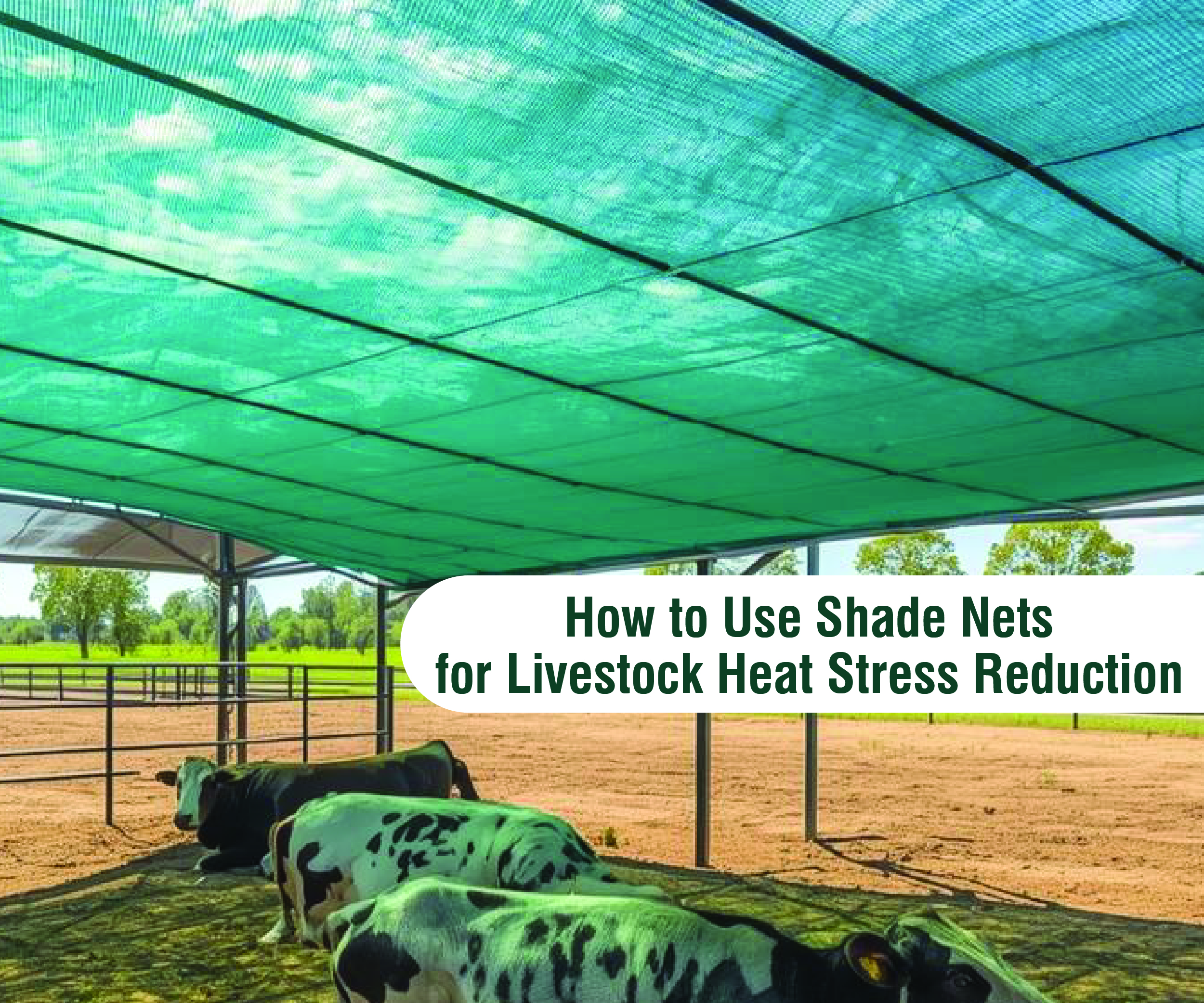
Staying Cool on the Farm: How to Use Shade Nets for Livestock Heat Stress Reduction
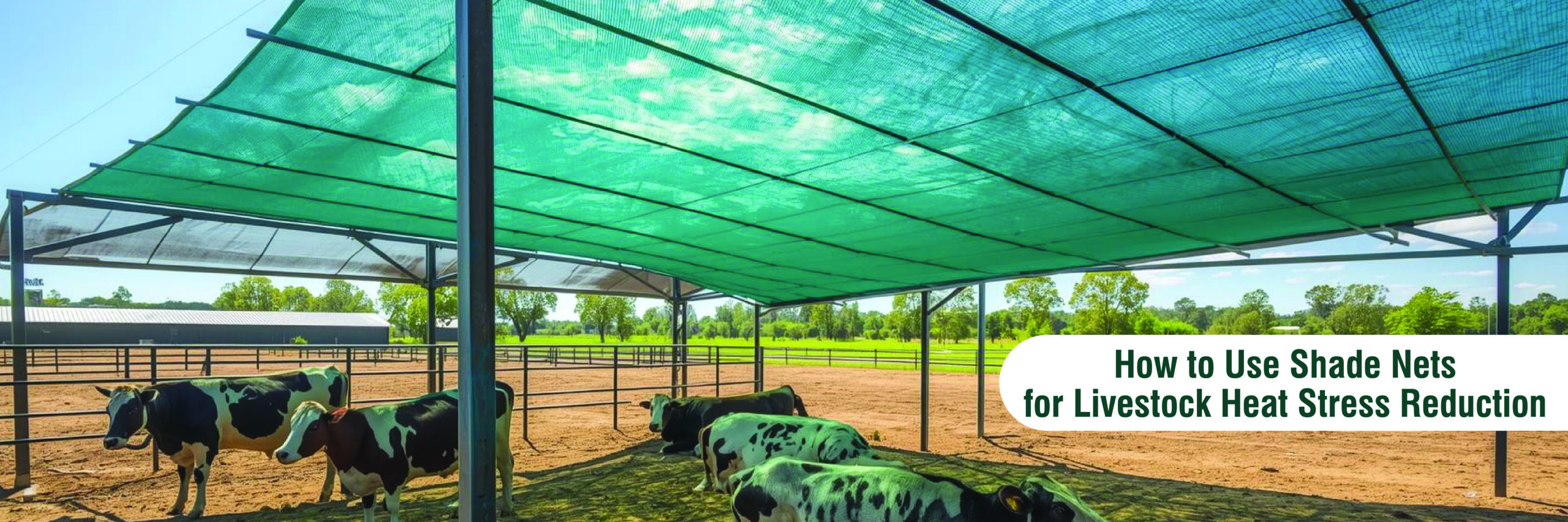
Introduction: The Threat of Heat Stress
Heat stress occurs when livestock—including cattle, poultry, and sheep—can no longer dissipate enough heat to maintain a stable core body temperature. This condition is a significant threat to farm productivity, leading to:
-
Cattle: Reduced milk production, lower conception rates, and decreased feed intake.
-
Poultry: Lowered egg production, poor shell quality, and increased mortality.
-
Sheep: Decreased wool quality and slower weight gain.
HDPE (High-Density Polyethylene) Shade Nets offer an essential, cost-effective, and passive solution to mitigate this problem. By dramatically reducing the solar radiation that causes direct heating, these nets provide immediate and measurable relief, ensuring the health and productivity of your animals.
This guide details the best practices for using shade nets to effectively manage heat stress in your livestock.
I. The Mechanism of Thermal Relief
Shade nets provide relief by modifying the physical environment around the animals, addressing both radiant heat and ambient temperature.
1. Blocking Radiant Solar Energy
-
The Problem: Animals absorb large amounts of heat directly from the sun (radiant heat). Dark-colored hides absorb this heat faster.
-
The Solution: Shade nets, particularly those with high density (80% to 90% shade), intercept the vast majority of solar radiation. This prevents the primary source of direct heat gain, allowing the animals’ natural cooling mechanisms to work effectively.
2. Lowering Ambient Temperature
-
Cooling Effect: By blocking the sun, the net prevents the ground, pen walls, and air beneath it from heating up excessively. This can lower the local air temperature by $5^circ C$ to $10^circ C$ ($9^circ F$ to $18^circ F$) during peak heat hours.
-
Reduced Ground Temperature: This is critical for animals like chickens or pigs, who often rest on the ground. A cooler surface aids conductive heat loss from the animal’s body.
3. Providing a Windbreak
-
Airflow Management: While the area should remain open for ventilation, a properly positioned shade net (especially on the western or southern exposure during peak sun hours) can also help temper high, hot winds, reducing dehydration.
II. Best Practices for Installation and Structure
The effectiveness of shade for livestock is highly dependent on structure design and net selection.
1. Choosing the Right Net Density
-
Prioritize Max Coverage: For livestock, the primary goal is maximum heat blockage and UV protection. Choose a shade net with a high density, typically $80%$ to $90%$ shade percentage.
-
UV Protection: High density also maximizes the net’s UV stabilization, protecting the animals from harmful UV radiation that can affect eyes and skin.
2. Structure Height and Orientation
-
Maintain Height: The shade structure must be tall enough to allow hot air to escape and be replaced by cooler air. A height of 10 to 14 feet (3 to 4.5 meters) is often recommended, especially for cattle.
-
Orientation: Position the shade structure or shade net panels to provide maximum coverage during the hottest part of the day, which is usually mid-morning to mid-afternoon (10:00 AM to 4:00 PM). In the Northern Hemisphere, this means positioning the shade to the south and west of the resting area.
3. Location and Ground Management
-
Avoid Paved Areas: Never shade paved or concrete areas alone. These materials absorb and re-radiate massive amounts of heat.
-
Use Grass/Dirt: Position the shade over a dry, well-drained area like grass or packed dirt. The ground under the shade should be kept clean to prevent the buildup of moisture and heat.
III. Specific Application by Livestock Type
1. Dairy and Beef Cattle
-
Free-Stall & Feedlots: Shade nets are crucial over feeding troughs to encourage continuous feed intake and over holding pens and resting areas to promote rumination and milk synthesis.
-
Water Troughs: Ensure water troughs are also shaded. Cattle will drink more frequently and consume cooler water, which aids internal cooling.
2. Poultry
-
Side Wall Protection: For open-sided poultry houses, dense shade nets ($75%$ to $80%$) should be deployed on the side walls facing the morning and afternoon sun. This stops direct sun from entering the interior.
-
Roof Overhang: A shade net placed a few feet above the metal roof of the coop can dramatically reduce the heat transferred down into the poultry house.
3. Sheep and Goats
-
Shearing: Shade is particularly important immediately after shearing, as the animals are more vulnerable to sun exposure.
-
Maternity Pens: Shade should be prioritized over maternity and nursing pens, as heat stress affects both the mother and the newborn’s survival rate.
IV. Conclusion: A Welfare and Profit Priority
Shade nets are an indispensable tool for farmers committed to both animal welfare and economic viability. By providing a reliable, passive barrier against intense solar radiation, these nets effectively prevent heat stress, ensuring that your livestock remain comfortable, healthy, and productive even during the hottest parts of the year. Investing in proper shade is investing directly in the profitability and sustainability of your farm.