
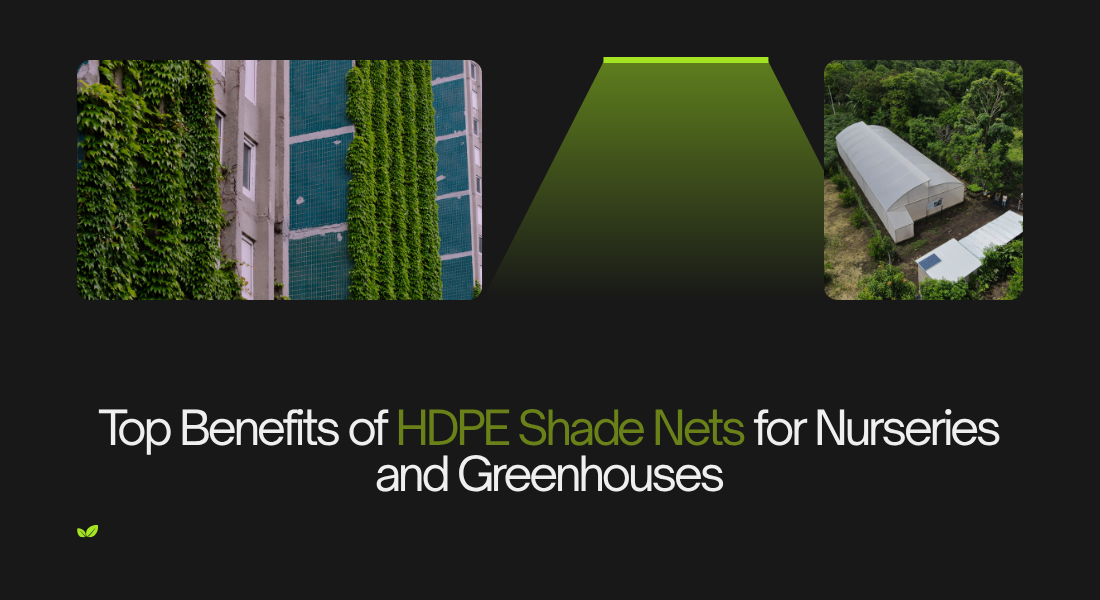
Top Benefits of HDPE Shade Nets for Nurseries and Greenhouses

Introduction

Successful nursery and greenhouse farming depends on creating the right environment for healthy plant growth. Excessive sunlight, high temperatures, strong winds, and harsh weather conditions can negatively affect plant development and reduce productivity. HDPE (High-Density Polyethylene) Shade Nets have become an essential solution for growers looking to protect plants while maintaining optimal growing conditions.

Designed with UV-stabilized materials, HDPE shade nets provide effective protection and help improve crop quality, making them a popular choice for nurseries, greenhouses, and horticultural farms.

What Are HDPE Shade Nets?

HDPE shade nets are durable knitted fabrics made from high-quality polyethylene. They are designed to reduce sunlight intensity while allowing adequate airflow and moisture circulation. Available in various shading percentages such as 50%, 75%, and 90%, these nets can be selected according to specific crop requirements.

Key Benefits of HDPE Shade Nets

1. Protection from Excessive Sunlight

Direct exposure to intense sunlight can cause leaf scorching, dehydration, and reduced plant growth. HDPE shade nets filter sunlight and create a balanced environment that supports healthy development.

2. Temperature Control

Shade nets help reduce the temperature inside nurseries and greenhouses. By minimizing heat buildup, they create a cooler environment that encourages better seed germination and plant growth.

3. Improved Plant Growth

Plants thrive in stable environmental conditions. HDPE shade nets help maintain ideal temperature and humidity levels, resulting in stronger roots, healthier foliage, and improved crop quality.

4. Enhanced Water Conservation

Excessive heat increases water evaporation from soil and plant surfaces. Shade nets reduce moisture loss, helping growers save water while maintaining proper hydration for crops.

5. Protection from Wind and Harsh Weather

Strong winds can damage delicate plants, seedlings, and flowers. HDPE shade nets act as a protective barrier, reducing the impact of wind and other environmental stresses.

6. Better Seedling Survival Rate

Young plants and seedlings are highly sensitive to weather fluctuations. Shade nets create a controlled environment that improves survival rates and supports healthy early-stage growth.

7. UV Protection

High-quality HDPE shade nets are UV stabilized, ensuring long-lasting performance even under continuous exposure to sunlight. This durability makes them a cost-effective investment for growers.

8. Reduced Pest and Bird Damage

Shade net structures can help limit the entry of birds and certain pests, reducing crop damage and improving overall productivity.

9. Suitable for Various Crops

HDPE shade nets are ideal for growing vegetables, flowers, fruits, medicinal plants, ornamental plants, and nursery saplings. Their versatility makes them suitable for multiple agricultural applications.

10. Cost-Effective Farming Solution

Compared to other climate-control systems, HDPE shade nets offer an affordable and efficient method of protecting crops and improving yields. Their long service life further enhances return on investment.

Applications of HDPE Shade Nets

  • Commercial Nurseries
  • Greenhouses
  • Flower Cultivation
  • Vegetable Farming
  • Fruit Plant Production
  • Horticulture Projects
  • Landscaping and Gardening
  • Protected Agriculture Structures

Choosing the Right Shade Percentage

Different crops require different levels of protection:

  • 50% Shade Net: Suitable for vegetables and general cultivation.
  • 75% Shade Net: Ideal for nurseries and sensitive crops.
  • 90% Shade Net: Best for high-temperature regions and specialized applications.

Selecting the correct shade percentage helps maximize plant growth and productivity.

Conclusion

HDPE shade nets play a vital role in modern nursery and greenhouse farming. They provide protection from excessive sunlight, regulate temperature, conserve water, and create favorable growing conditions for plants. With their durability, versatility, and cost-effectiveness, HDPE shade nets have become an essential investment for growers seeking healthier crops and higher yields.

Whether you operate a small nursery or a large greenhouse, choosing high-quality HDPE shade nets can significantly improve plant performance and overall farm profitability.
Direct Factory Purchase vs Dealer Purchase: Shade Net Comparison

Introduction

When purchasing shade nets for agriculture, gardening, construction, or commercial applications, buyers often face a common question: Should you buy directly from a manufacturer or through a dealer? Both options have their advantages, but the right choice depends on your budget, quantity requirements, customization needs, and long-term goals.

Understanding the differences between manufacturers and dealers can help you make a smarter purchasing decision and get the best value for your investment.

Understanding Shade Net Manufacturers

A shade net manufacturer is the company that produces the nets using raw materials and advanced manufacturing processes. Manufacturers typically offer a wide range of products, including agricultural  greenhouse nets, fencing nets, and construction safety nets.

Buying directly from a manufacturer allows customers to source products straight from the production facility without involving intermediaries.

Understanding Shade Net Dealers

Dealers act as distributors or retailers who purchase  from manufacturers and sell them to farmers, businesses, contractors, and individual customers. Dealers often maintain local inventory and provide quicker access to products in nearby markets.

They serve as a bridge between manufacturers and end users, making products easily available in different regions.

Benefits of Buying Directly from a Manufacturer

Better Pricing

One of the biggest advantages of purchasing directly from a manufacturer is cost savings. Since there are no middlemen involved, buyers often receive more competitive pricing, especially for bulk orders.

Product Customization

Manufacturers can provide customized solutions based on specific requirements such as shade percentage, color, width, GSM, and roll size. This flexibility is especially beneficial for commercial farming projects and large-scale applications.

Guaranteed Product Quality

Buying directly from the source ensures authenticity and consistent quality. Manufacturers follow strict quality control processes and can provide detailed product specifications.

Bulk Supply Capability

Large agricultural projects and distributors often require significant quantities of shade nets. Manufacturers have the production capacity to fulfill bulk orders efficiently.

Technical Support

Most manufacturers offer expert guidance regarding  selection, installation, and maintenance, helping customers choose the most suitable product.

Benefits of Buying from a Dealer

Easy Availability

Dealers usually maintain ready stock, allowing customers to purchase products quickly without waiting for manufacturing schedules.

Convenient Location

Local dealers are often easily accessible and can provide immediate assistance and product delivery.

Lower Minimum Order Quantity

For small farmers, gardeners, or homeowners, dealers may be a practical option because they often sell smaller quantities than manufacturers.

Faster Purchase Process

Customers can inspect products physically and make immediate purchases without lengthy order procedures.

Factors to Consider Before Choosing

Quantity Requirements

If you require for large-scale farming or commercial projects, purchasing directly from a manufacturer is often more cost-effective. For smaller requirements, a dealer may be sufficient.

Customization Needs

When specific shade percentages or custom dimensions are required, manufacturers usually provide more options than local dealers.

Budget

Manufacturers generally offer better pricing for bulk purchases, while dealers may be more convenient for small orders despite slightly higher prices.

Delivery Time

Dealers often provide immediate availability, whereas customized manufacturer orders may require additional production time.

Product Quality Assurance

Buying directly from a reputable manufacturer can provide greater confidence regarding product quality, durability, and UV stabilization.

Which Option is Best for Farmers?

For commercial farmers and agricultural businesses, buying directly from a trusted manufacturer is usually the better choice. It offers better pricing, consistent quality, customization options, and reliable support.

However, small-scale farmers who need limited quantities and immediate availability may find local dealers more convenient.

Tips for Buying Quality Shade Nets

Before making a purchase, always:

  • Check UV stabilization features.
  • Verify the shade percentage suitable for your crops.
  • Review product specifications and quality certifications.
  • Compare durability and warranty options.
  • Choose a trusted supplier with industry experience.
  • Ensure the net is made from high-quality HDPE material.

Conclusion

Both manufacturers and dealers play important roles in the shade net supply chain. If your priority is competitive pricing, bulk orders, customization, and direct quality assurance, purchasing from a manufacturer is often the ideal choice. If convenience, quick availability, and smaller order quantities are your main concerns, a dealer may be a suitable option.

By evaluating your specific needs and choosing a reliable supplier, you can invest in high-quality shade nets that provide long-term performance and value for your agricultural or commercial applications.

Shade Net House Farming: Investment, Benefits & ROI

Introduction

Modern farming is rapidly evolving, and one of the most effective methods for increasing crop productivity is shade net house farming. Farmers across India are adopting shade net houses to protect crops from harsh weather conditions, improve crop quality, and achieve higher profits. Whether you are a small farmer or a commercial grower, investing in a shade net house can be a smart decision for sustainable agriculture.

In this blog, we will discuss the investment required, key benefits, and return on investment (ROI) of shade net house farming.

What is Shade Net House Farming?

A shade net house is a protected cultivation structure covered with specially designed HDPE shade nets. These nets help regulate sunlight, temperature, humidity, and airflow, creating an ideal environment for plant growth.

Shade net houses are commonly used for growing:

  • Vegetables
  • Fruits
  • Flowers
  • Herbs
  • Nursery plants
  • Exotic crops

Investment Required for a Shade Net House

The cost of setting up a shade net house depends on several factors, including size, net quality, structure type, and location.

Major Investment Components

1. Structure Construction

The frame is usually made from galvanized iron (GI) pipes or steel structures that provide durability and stability.

2. Shade Net Installation

High-quality UV-stabilized HDPE shade nets are installed according to crop requirements, typically ranging from 35% to 90% shading.

3. Irrigation System

Drip irrigation and misting systems help maintain proper moisture levels and reduce water wastage.

4. Land Preparation

Costs may include leveling, soil treatment, and bed preparation.

5. Labor and Maintenance

Initial installation and periodic maintenance expenses should also be considered.

The total investment varies based on farm size and project requirements, but the long-term benefits often outweigh the initial costs.

Benefits of Shade Net House Farming

Improved Crop Protection

Shade nets protect crops from:

  • Excessive sunlight
  • Heavy rainfall
  • Strong winds
  • Hailstorms
  • Birds and pests

This significantly reduces crop damage and losses.

Higher Crop Yield

The controlled environment allows crops to grow more efficiently, resulting in better productivity and increased harvests.

Better Crop Quality

Shade net farming improves the appearance, size, color, and overall quality of fruits, vegetables, and flowers, leading to better market prices.

Water Conservation

When combined with drip irrigation systems,  houses help reduce water consumption while maintaining optimal moisture levels.

Extended Growing Seasons

Farmers can cultivate crops for longer periods and even grow certain crops during off-seasons, increasing earning opportunities.

Reduced Pest and Disease Incidence

The protected environment minimizes exposure to pests and diseases, reducing dependency on chemical pesticides.

Best Crops for Shade Net House Farming

Several crops perform exceptionally well under shade net structures:

Vegetables

  • Capsicum
  • Tomato
  • Cucumber
  • Lettuce
  • Spinach

Flowers

  • Rose
  • Gerbera
  • Carnation
  • Marigold

Fruits

  • Strawberry
  • Dragon Fruit (young plants)

Nursery Plants

  • Ornamental plants
  • Fruit saplings
  • Vegetable seedlings

Understanding ROI in Shade Net Farming

Return on Investment (ROI) refers to the profitability generated from the initial investment.

Factors Affecting ROI

Crop Selection

High-value crops generally provide faster returns.

Market Demand

Selling crops during off-seasons can significantly increase profits.

Net Quality

Premium UV-stabilized  offer longer life and better protection, reducing replacement costs.

Farm Management

Efficient irrigation, fertilization, and crop care improve productivity and profitability.

Expected Returns

Many farmers experience:

  • Higher yields compared to open-field farming
  • Better quality produce
  • Increased market value
  • Reduced crop losses

Depending on crop selection and management practices, farmers often recover their investment within a few growing cycles while enjoying long-term benefits from the structure.

Tips for Maximizing Profits

  • Choose the right shade percentage for your crop.
  • Use high-quality UV-stabilized HDPE shade nets.
  • Implement drip irrigation systems.
  • Focus on high-demand crops.
  • Regularly maintain the structure and nets.
  • Monitor soil nutrients and crop health.

Why Choose Quality Shade Nets?

The success of a shade net house largely depends on the quality of the  used. Premium HDPE shade nets provide:

  • UV protection
  • Long service life
  • High durability
  • Better crop protection
  • Improved environmental control

Investing in quality agricultural nets ensures better crop performance and long-term savings.

Conclusion

Shade net house farming is a practical and profitable solution for modern agriculture. Although the initial investment may seem significant, the benefits of higher yields, improved crop quality, water conservation, and reduced crop losses make it a worthwhile investment. With proper planning and high-quality solutions, farmers can achieve excellent ROI and build a more sustainable farming business.

For reliable and durable agricultural shade net solutions, choose trusted manufacturers that offer premium HDPE designed for Indian farming conditions.