
Introduction
India’s agricultural landscape is undergoing a steady transformation, driven by climate variability, water scarcity, and the need for higher productivity. Among the many innovations supporting this shift, shade nets have emerged as a vital solution for modern farming. The growing demand for shade nets in India reflects a broader move toward protected cultivation, enabling farmers to achieve better yields while reducing environmental risks.
In 2026, the shade net market is witnessing rapid expansion, fueled by technological advancements, government support, and increased awareness among farmers.
What Are Shade Nets?
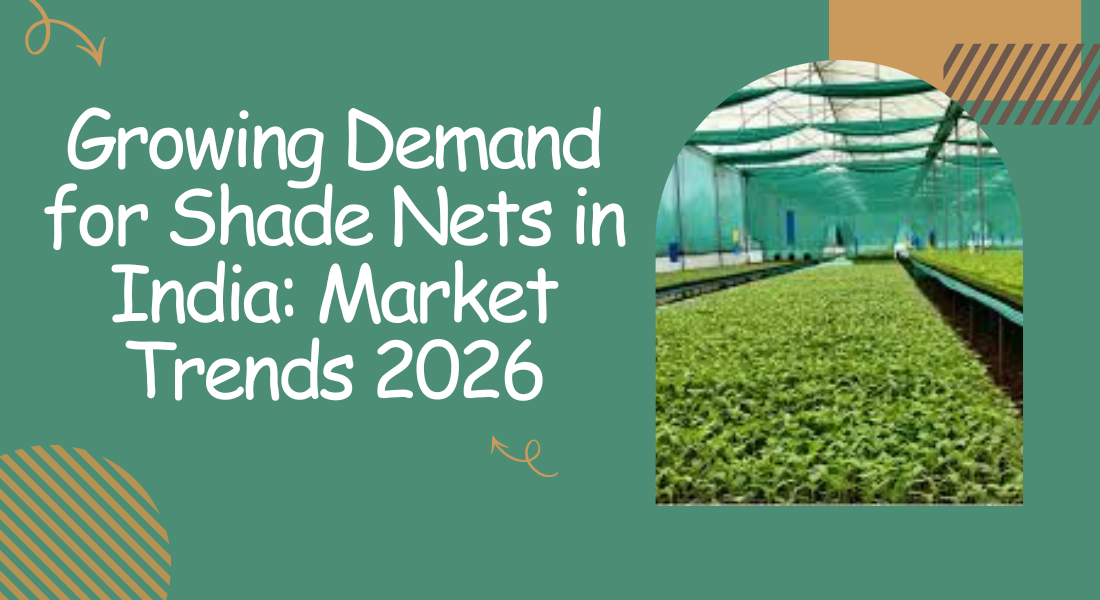
They are specialized fabric materials designed to control sunlight, temperature, humidity, and wind in agricultural environments. Typically made from high-density polyethylene (HDPE), these nets are used in nurseries, greenhouses, polyhouses, and open-field farming.
They come in different shade percentages (like 35%, 50%, 75%, and 90%) and colors (green, black, white, red), each suited for specific crops and climatic conditions.
Key Factors Driving the Growing Demand for Shade Nets in India
1. Climate Change and Extreme Weather Conditions
Unpredictable weather patterns, including excessive heat, erratic rainfall, and strong winds, have made traditional farming increasingly risky. Is act as a protective barrier, reducing heat stress and preventing crop damage.
2. Rise of Protected Cultivation
Farmers are shifting toward controlled farming methods such as polyhouse and greenhouse cultivation. Is play a crucial role in these systems by maintaining optimal growing conditions.
3. Government Subsidies and Support
Various government schemes in India offer subsidies for protected cultivation, including shade net houses. This financial assistance has significantly boosted adoption among small and medium-scale farmers.
4. Increased Demand for High-Quality Produce
With growing urbanization and consumer awareness, there is rising demand for uniform, pesticide-free, and high-quality fruits, vegetables, and flowers. Is help improve crop quality by creating a stable environment.
5. Expansion of Horticulture Sector
India’s horticulture sector is expanding rapidly, including floriculture, vegetable farming, and fruit cultivation. They are widely used in these segments to enhance productivity and reduce crop losses.
Read More: Best Shade Net for Nursery Farming
Market Trends for Shade Nets in India (2026)
1. Technological Advancements
Manufacturers are introducing UV-stabilized, durable, and long-lasting with improved performance. New materials offer better resistance to sunlight degradation and harsh weather conditions.
2. Customization and Crop-Specific Solutions
Farmers are increasingly opting for customized shade nets tailored to specific crops such as orchids, capsicum, tomatoes, and leafy greens.
3. Growth of Agri-Tech Integration
Integration of shade nets with automated irrigation systems, sensors, and smart farming technologies is becoming more common, especially among progressive farmers.
4. Rising Export Opportunities
Indian manufacturers are exporting shade nets to other countries due to competitive pricing and improving quality standards.
5. Increased Adoption in Urban Farming
Terrace gardening, vertical farming, and urban nurseries are also contributing to the demand for shade nets, especially in cities.
Benefits of Using Shade Nets
- Protection from excessive sunlight and UV rays
- Reduced water evaporation and improved moisture retention
- Protection from pests, birds, and strong winds
- Improved crop yield and quality
- Cost-effective compared to full greenhouse systems
Challenges in the Shade Net Market
Despite its growth, the industry faces some challenges:
- Lack of awareness in remote rural areas
- Initial investment cost for small farmers
- Availability of low-quality products in the market
- Need for proper training on usage and maintenance
Future Outlook
The future of the shade net market in India looks highly promising. With continuous innovation, increasing farmer awareness, and government initiatives, the adoption rate is expected to grow significantly over the next few years.
By 2030, shade nets are likely to become a standard component of modern agriculture, especially in regions facing climatic stress.
Conclusion
The growing demand for shade nets in India highlights a critical shift toward sustainable and efficient farming practices. As farmers strive to maximize productivity while minimizing risks, shade nets offer a practical and scalable solution.
With strong market momentum in 2026, this segment is set to play a key role in shaping the future of Indian agriculture.